
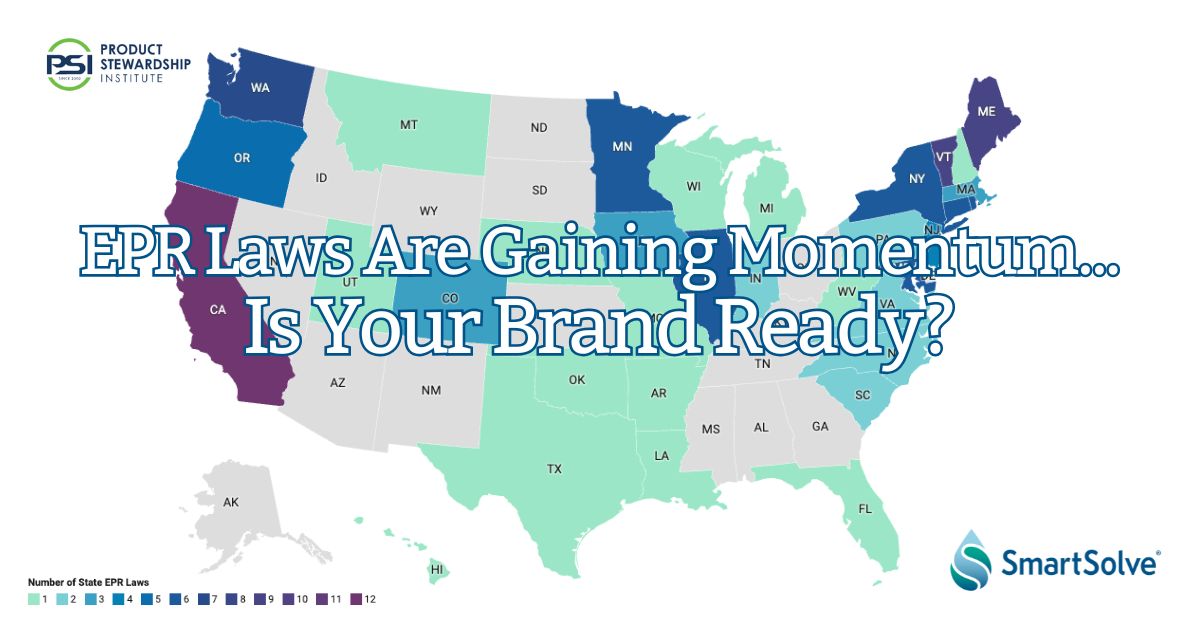
If you’ve been in the industry more than a couple of years, you have undoubtedly noticed the influx of regulations and proposed bills around Extended Producer Responsibility (EPR). EPR laws are likely here to stay, and they’re reshaping the packaging landscape as we know it. For brands focused on sustainability, innovation, and long-term growth, understanding EPR laws is becoming table stakes.
With Colorado, Oregon, and California leading the charge (and several other states not far behind) packaging and sustainability leaders need to act now. Staying ahead means adapting materials, partnerships, and compliance strategies before regulations mandate it.
In this article, we break down where EPR stands today, what brands need to prepare for, and how innovations like SmartSolve’s water-dispersible materials can support compliance and circularity.
What is EPR in Packaging and Why Should You Care?
EPR in packaging refers to laws that shift the financial and operational responsibility for managing post-consumer packaging waste to the producers themselves. In other words, if you make or sell products in packaging, you may soon be on the hook for funding or facilitating their recovery.
Why is this happening now? A few reasons:
- Consumer demand for sustainable packaging is at an all-time high (per PwC’s 2024 survey, consumers are willing to pay almost 10% more for sustainable goods).
- Recycling infrastructure is lagging, and current systems can’t keep up with modern packaging formats.
- Plastic waste is outpacing recovery rates, particularly in single-use formats.
Rather than rely solely on government funding or consumer participation, EPR seeks to close the loop by encouraging producers to design for recovery, reduction, and reuse from the start.
Key Extended Producer Responsibility Packaging Laws by State to Watch
Colorado EPR Laws
Passed in 2022, Colorado became the first state with a fully producer-funded EPR program for packaging (HB22-1355). Producers will be required to join a Producer Responsibility Organization (PRO) and fund statewide recycling improvements. Implementation planning is underway, with compliance expected to begin in 2026.
Oregon EPR Laws
Oregon’s Plastic Pollution and Recycling Modernization Act requires producers to pay into a shared system that expands access to recycling and improves performance targets. It includes eco-modulated fees based on the environmental impact of the packaging, creating real incentives for recyclability.
California SB 54
California’s sweeping SB 54 law mandates that all single-use packaging be recyclable or compostable by 2032, with a 25% reduction in plastic packaging overall.
Though implementation details are still being finalized, producers must join a PRO similar to Colorado. SB 54 has already sparked significant movement across the packaging industry.
What EPR Laws Mean for Packaging Leaders
If you sell into these states – or plan to – these regulations aren’t optional. Packaging teams must proactively adapt, ensuring materials and formats align with current and upcoming recovery capabilities.
That means:
- Auditing current packaging formats to assess recyclability and environmental impact
- Joining or coordinating with a PRO to track and fund recycling efforts
- Reevaluating packaging design to reduce complexity and maximize recyclability
- Preparing for reporting and labeling compliance to stay ahead of enforcement timelines
EPR laws are accelerating the shift to circular packaging, and brands that treat these policies as an opportunity will be the ones that lead in both compliance and consumer trust.
— Alex Abbott, Chief Revenue Officer, SmartSolve
How SmartSolve Partners With Brands to Future-Proof Packaging & Circularity
At SmartSolve, we develop packaging materials with both performance and circularity in mind. From water-soluble labels to Zero Waste pouches, our bio-based, water-dispersible technologies are engineered to reduce environmental impact, streamline recycling workflows, and help brands align with evolving global packaging legislation — including Extended Producer Responsibility (EPR) mandates.
Water-Soluble Label Materials
Our dissolvable label materials are a game-changer for brands seeking a truly recyclable solution. Backed by APR Design™ Recognition, these labels meet stringent industry guidance to ensure compatibility with plastic recycling streams — a critical step in making a “recyclable” claim credible. Unlike conventional labels that leave behind adhesives or film contamination, SmartSolve’s label stocks:
- Eliminate downstream processing issues like adhesive gumming and residual label debris
- Disperse in water without the need for caustic chemicals or excessive heat
- Support cleaner separation of PET, HDPE, and other resins during reclaim
With increasing scrutiny from retailers, regulators, and consumers around the accuracy of recyclability claims, this recognition provides assurance that brands using our label solutions are on the right side of compliance and credibility.
Zero Waste Pouch Materials
Our water-soluble pouch materials represent an entirely different path — one that reimagines the role of packaging altogether. These pouches disperse in water, leaving no physical waste behind. Whether our Pouch Stock is flushed, rinsed down the drain, recycled, or disposed of in traditional waste streams, the material is engineered to biodegrade (Readily Biodegradable per OECD 301B).
In the context of EPR, SmartSolve’s water-soluble pouch stock presents a bold opportunity: the material disperses in water, leaving no physical waste to collect, recover, or manage. Hence our slogan, Zero Waste. Zero Hassle.™
While regulations are still evolving to address water-dispersible formats, our pouch technology aligns directly with the core intent of EPR—eliminating packaging waste at the source. With multiple end-of-life options and certified biodegradability, it also supports your plastic reduction goals.
What’s Next for EPR (& How to Stay Ahead)
Federal interest in EPR is growing, and it’s likely we’ll see harmonized policies in the next few years. For brands, this isn’t a moment to wait and see. It’s time to future-proof your packaging systems.
Here’s how:
- Join sustainability coalitions like the Sustainable Packaging Coalition or APR
- Test innovative materials in limited SKUs or new product launches
- Collaborate cross-functionally across R&D, compliance, procurement, and marketing
- Prioritize reduction, not just recycling
The shift toward EPR isn’t just about rules—it’s about responsibility. Forward-thinking brands have an opportunity to lead by example and align their packaging systems with the circular economy.
![Tips to stay ahead of Extended Producer Responsibility regulations]](https://eadn-wc05-11968679.nxedge.io/wp-content/uploads/HowtoStayAheadofEPR-1024x1024.png)
By adapting now, brands can avoid costly retrofits later and unlock new opportunities for innovation, efficiency, and consumer engagement. At SmartSolve, we’re here to help you stay ahead of the curve.
Want to learn more about how SmartSolve can support your brand’s sustainability goals and remain compliant with EPR regulations? Contact us here or explore our solutions today.