
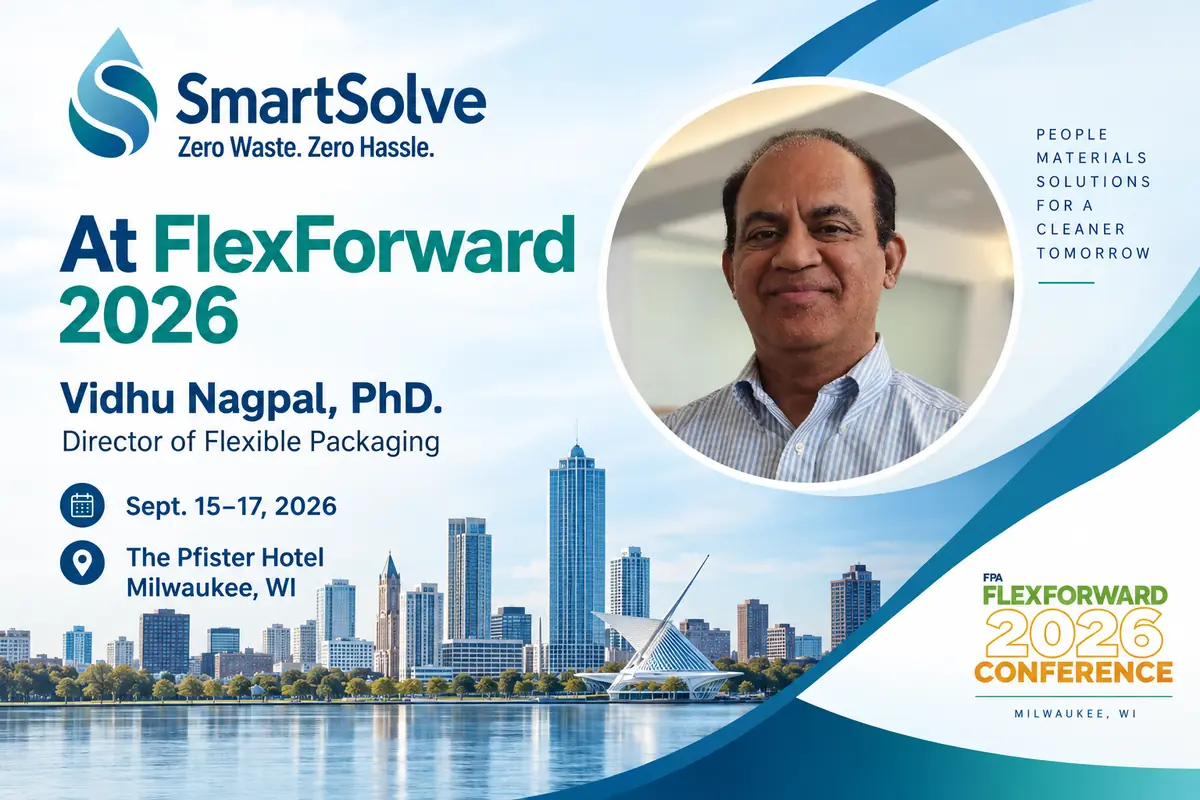
Flexible packaging is the second-largest packaging category in the U.S., but it faces a stubborn problem: of the roughly 9 million tons generated each year, only about 1% gets recycled, mostly through store drop-off programs. That gap, and what to do about it, framed much of the conversation at the Flexible Packaging Association (FPA) 2026 FlexForward® Conference in Milwaukee this September.
SmartSolve’s Director of Flexible Packaging, Vidhu Nagpal, PhD, attended the conference, held September 15–17 at The Pfister Hotel, and came away with a clearer picture of where flexible packaging regulations, recycling economics, and material innovation are pulling the industry next.
1. The Numbers Behind the Urgency
Market Snapshot
| Segment | Share of U.S. packaging |
|---|---|
| Corrugated | 30% |
| Flexible | 19.6% |
| Rigid (bottles, jars, cans) | 10% |
- Flexible packaging is the second-largest packaging type in the U.S. About 9 million tons are generated each year, but only about 1% is recycled, mostly through store drop-off.
- Food accounts for 45% of flexible packaging; CPG accounts for 2%. [EDITORIAL NOTE: Confirm whether the CPG figure includes food before publishing.]
- Growth is slowing, from 5% in 2017 to 2% in 2025.
2. State Flexible Packaging Regulations Are Setting the Pace
Federal policy remains fairly hands-off for now, but state-level rules are moving fast and will likely shape material decisions for years to come.
Colorado and Oregon have already implemented extended producer responsibility (EPR) programs with eco-modulated fees, meaning materials with a lower environmental impact cost brand owners less. California’s SB 54 takes effect in January 2027 and treats compostable packaging as a compliant pathway, funneling fees to the Circular Action Alliance to build out recycling and composting infrastructure. Its 2032 requirement that packaging be recyclable or compostable is a significant tailwind for alternative materials.
California’s SB 343, which would restrict recyclability claims and the chasing-arrows symbol to materials actually collected and reprocessed in-state, is currently on hold. If it moves forward, it could favor water-soluble solutions that make paper packaging genuinely recyclable.
At the federal level, the STEWARD Act passed the U.S. Senate in November 2025 and now awaits action in the House. It doesn’t impose producer requirements, but its composting assessment and data collection could influence how policymakers eventually view water-soluble and alternative end-of-life materials. New Jersey has also introduced a bill targeting microplastics release, an early signal that state attention on this issue is only growing.
3. Keynote: The “Win Monday” Concept
A highlight of the conference was a keynote from Paul Epstein, former Inside Sales Manager for the LA Clippers, on the habits that helped the team rise to the second-highest revenue in the league during his 15 years there.
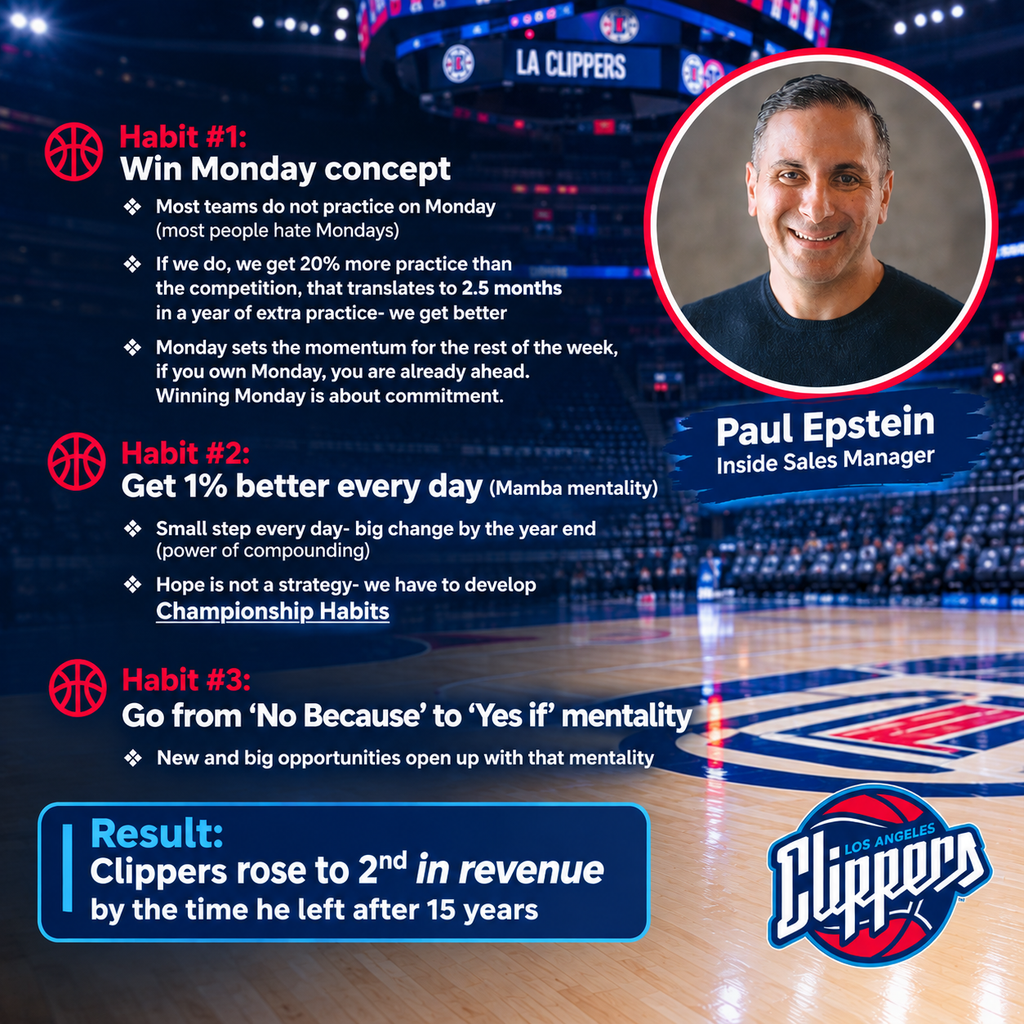
His framework centered on three habits:
- Win Monday: Most teams skip practice that day, and showing up anyway compounds into roughly 2.5 extra months of practice a year.
- Get 1% better every day: Small, consistent steps are the real driver of long-term change.
- Shift from “no, because” to “yes, if”: A mindset he credited with opening up new and bigger opportunities.
It’s a fitting note for an industry facing real constraints but real opportunity, and one that lines up with how SmartSolve approaches its own work.
4. Two Problems Without Easy Answers
Two challenges came up repeatedly: recycled resin demand and microplastics.
Post-consumer recycled (PCR) resin is often lower quality and costlier than virgin resin, which keeps demand for it soft, a real headwind for recyclers trying to build a circular system. Microplastics research faces its own obstacle: testing methods to reliably identify sources are still immature, and panelists noted that packaging often takes the blame by default while the underlying science catches up.
5. Where This Leaves Water-Soluble Materials
EPR means your packaging now carries an end-of-life bill, and flexible plastic sits in the highest fee tiers. PureNil™ 0 is paper-based, 100% bio-based, and plastic-free. It cuts plastic by design toward targets like California’s 25% reduction, gives consumers recycle, compost, or flush options, and puts you in a stronger position as fee schedules mature.
We can’t yet promise how every material will be classified under each state’s evolving EPR framework, but the direction of the regulatory landscape looks favorable for water-soluble, plastic-free solutions like PureNil™ 0.
Curious to learn more about water-soluble materials? Contact us today, we’d love to chat.

Digital Content Coordinator