
Coming home from SPC Impact
The SmartSolve team just got back from SPC Impact in Nashville, and one theme cut through almost every conversation: film recyclability and how it’s going to be measured under EPR. With California’s SB 54, Oregon and Maine already operational, and a growing patchwork of state laws layering in over the next 24 months, the industry is being asked a hard question. What actually happens to a flexible package after a consumer is done with it — and can you prove it?
That question is no longer rhetorical. EPR fees, eco-modulation incentives, and labeling laws like SB 343 are turning end-of-life from a marketing claim into a measurable, financial reality. Packaging that can’t demonstrate real recovery in real-world infrastructure is going to cost producers more — or, in some cases, get pulled from the shelf.
We had the chance to share our perspective in one of the breakout sessions, and the title of that talk is the title of this article: Packaging Revolution: 3 proven shifts in end-of-life design driving tomorrow’s leaders. What follows is the argument we made on stage, expanded for the people who couldn’t be in the room.
It starts, of all places, with horse manure.
The crisis we stopped smelling

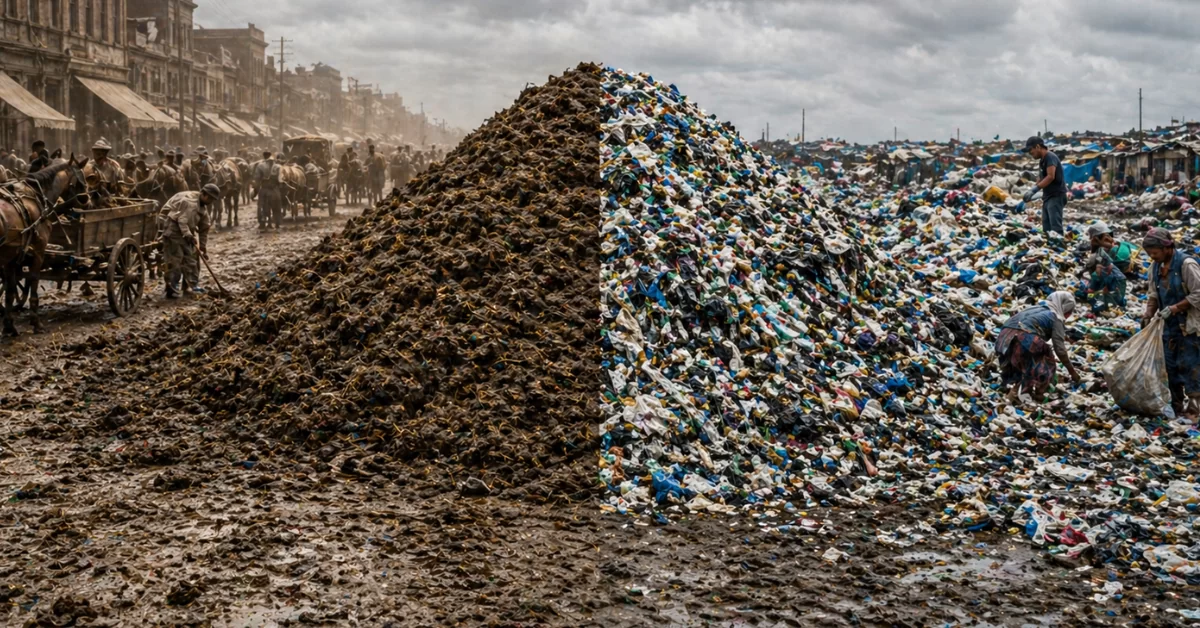
In 1894, if you walked down a street in London or New York, you didn’t smell the city. You smelled the horses. New York alone had more than 100,000 of them hauling people, goods, and the economy itself. Each one produced fifteen to thirty-five pounds of manure a day. It piled up in vacant lots three stories high. It bred flies that spread disease. It was tracked into homes, ground into the air people breathed, washed into the water they drank.
Everyone knew it was a crisis. Delegates convened an international summit about it in 1898 and left without an answer. They couldn’t see a way out, because the horse was the foundation of everything — commerce, mobility, agriculture, the daily rhythm of urban life.
Today we have our own invisible crisis. It’s tracked into our homes, ground into the air we breathe, washed into the water we drink. We just call it by a different name.
Microplastics. Nanoplastics. The manure of our modern economy.
Why plastic isn’t going anywhere — and why that’s the wrong fight
Here’s where most sustainability conversations lose the room. The next move is usually a guilt trip about plastic, followed by a call to ban, restrict, or shame our way to a cleaner future.
That’s the wrong talk, and it’s the wrong fight.
Flexible plastic packaging isn’t winning by accident. It’s winning because, by almost every metric a brand, a logistics manager, or a consumer actually uses, it’s better. It’s lighter, which lowers transportation carbon. It’s cheaper, which keeps products affordable. It extends shelf life, which prevents food waste — itself one of the largest climate contributors on the planet. It performs in conditions where paper, glass, and rigid containers simply can’t.
Anyone who tells you we’re going to ban our way out of this hasn’t done the math. In 1900, no one was going to ban the horse either. The horse was indispensable. So is the flexible pouch.
The question isn’t how to get rid of flexible plastic. The question is how to get rid of the externality at the end of its life.
The quiet failure at the end of the flex pack supply chain
And here’s the externality the industry has been quietly carrying for thirty years.
Flexible plastic packaging is the second-largest packaging segment in the United States, a more than $40 billion industry, and it makes up roughly half of all plastic packaging waste and more than a quarter of all plastic municipal solid waste in the country. By volume, it is one of the largest material streams we produce.
It is also, by a wide margin, the least recyclable thing in the bin.
The US recycling rate for film and flexible packaging is less than 2 percent, and some sources put it below 1 percent — the worst of any packaging category. Less than 2 percent of Americans can even place film and flexible packaging in their curbside containers. Of the nearly five million tons generated each year, the overwhelming majority goes directly to landfill, incineration, or the environment.
This isn’t a temporary gap waiting for infrastructure to catch up. Multi-layer flexible structures are economically and physically miserable to separate. End markets for the recyclate are thin. Pilot programs keep pilot-ing. And the EPR laws now coming into force are going to make this gap visible — and expensive — in a way it has never been before.
From landfill to bloodstream
This is where the manure analogy stops being a clever historical comparison and starts being a literal one.
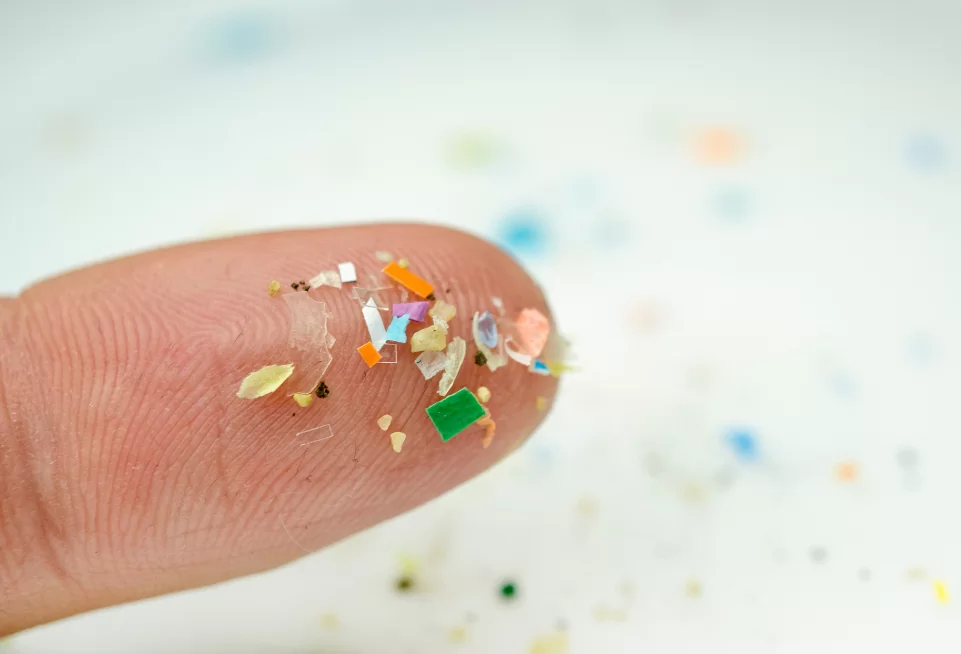
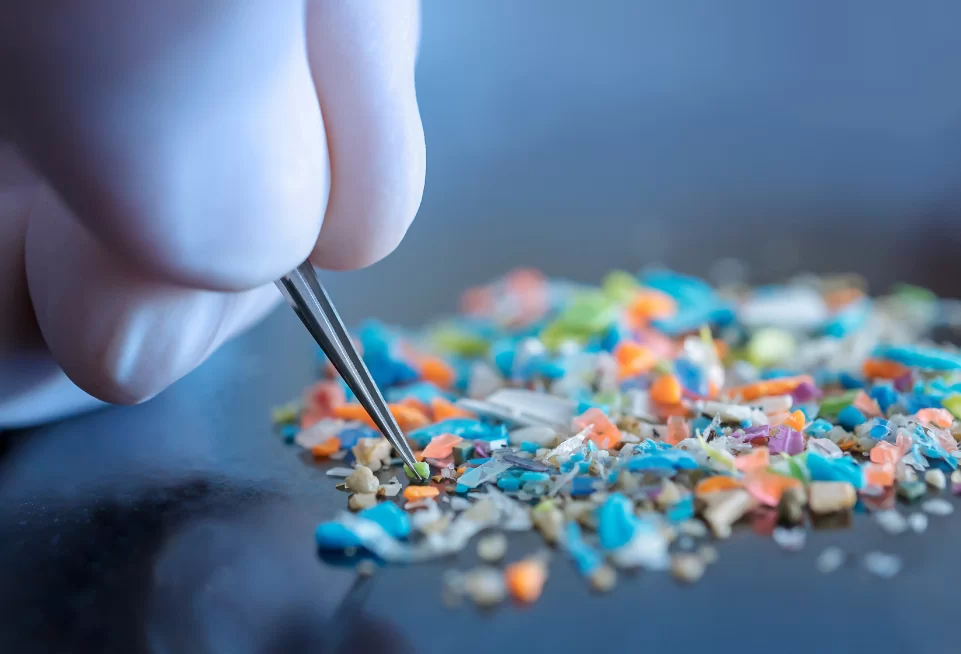
When flexible packaging ends up in a landfill — which is where the vast majority of it goes — it doesn’t sit there inert. UV exposure, mechanical stress, heat, and time break it down. Not into nothing. Into smaller and smaller fragments. Microplastics. And then nanoplastics, small enough to cross biological membranes.
Those fragments don’t stay in the landfill. They migrate through soil. They move through groundwater. They blow on the wind. They show up in agricultural fields, in the food supply, in rainwater in remote mountain ranges. They have been found in human blood, in placentas, in lung tissue, in the brain.
The pouch a consumer dropped in the trash last Tuesday is not done causing problems on Wednesday. It is the start of a forty- or four-hundred-year process of fragmenting into something we will be breathing, drinking, and eating for generations.
This is the through-line the industry has been slow to say out loud: the flex pack recycling gap and the microplastic crisis are the same problem. A package that doesn’t get recycled doesn’t disappear. It becomes the manure piling up in the streets. We just can’t see it, because the pieces are too small.
The pattern the manure crisis actually teaches us
The horse manure story is told so often as a feel-good anecdote about innovation that we miss the pattern underneath it. And the pattern — not the punchline — is what matters here.
Three things happen in these transitions.
First, an essential technology creates an invisible externality that society tolerates because the technology is too useful to give up. The horse powered civilization. Ignoring the manure was easier than reimagining the city.
Second, the externality reaches a tipping point where it can no longer be ignored. Public health. Water quality. Quality of life. The numbers stop working. EPR laws, microplastic research, and consumer awareness are bringing flex pack to that tipping point right now.
Third — and this is the part we get wrong — the winning answer doesn’t come from fighting the technology. It comes from reimagining it so the externality disappears as a side effect of a better design.
The Model T didn’t win because it was cleaner than a horse. It won on cost, on performance, on convenience. Clean streets were a byproduct. And that is exactly the bar the next generation of packaging has to meet.
Match plastic on cost. Match it on performance. Match it on convenience. And eliminate the end-of-life externality — not reduce it, not theoretically recover it, eliminate it.
That is the design brief for the next decade.
Water-soluble: a Model T for the right applications
Water-soluble packaging is not a silver bullet. The Model T wasn’t a silver bullet either — horses kept pulling plows on farms for decades. It was a category-defining answer for the right application: urban personal mobility. That was enough to change everything.
The same logic applies here.
For the right applications — and the qualifier matters — water-soluble packaging clears the Model T bar. It can match convenience and performance where the functional use case fits. It eliminates the end-of-life externality at the source rather than deferring it to a recovery system that hasn’t arrived in three decades.
The honest version of this argument includes its limits. Water-soluble isn’t the answer for every format or every environment. But for the applications where it fits, the math is different from anything else on the table. Less material in. No microplastic out. Waste eliminated by design, not managed after the fact.
The bet the next leaders are making
In 1900, the people who bet on better horses lost. The people who bet on wider streets lost. The people who bet on more shovels and better manure logistics lost. The winners were the ones who understood that the problem wasn’t the manure. The problem was the assumption that horses had to be the answer.
The next leaders in packaging won’t be the ones who make plastic slightly less bad. They won’t be the ones who defend an end-of-life system that hasn’t worked at scale and isn’t going to. They’ll be the ones who recognize that end-of-life is not a problem to manage after the sale. It is a design parameter, set at the beginning, engineered into the product, and measured by whether the externality exists at all.
They’ll build for a world where, for the right applications, the waste simply isn’t there to deal with — because it dissolved, it composted, it disappeared by design. And the microplastic that would have come from it never enters the soil, the water, or the bloodstream.
That was the conversation we came home from SPC Impact thinking about. EPR is going to force every producer in this industry to answer the end-of-life question honestly. The Model T is coming for packaging.
The only question is whether you’re building it, or shoveling behind it.

Marketing Coordinator