

Written By: Vidhu Nagpal, Ph.D
Global plastic production has risen dramatically over the past 70 years to reach 460 million tons1 and only 9% is recycled2. The majority of plastic waste is being incinerated, dumped in landfills, and released into the environment, causing significant environmental and health problems, with only a tiny percentage that does not exceed 10.0% recycled in the USA. Plastics produce small fragments or particles through crushing, splitting and degradation during use and these small fragments are called microplastics.
What are Microplastics?
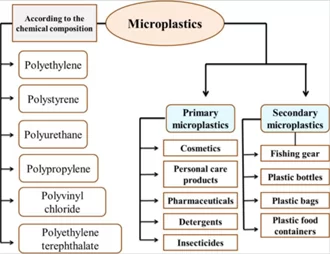
Microplastics are polymer fragments that can range from less than 0.2 inch (5 millimeters) down to 1/25,000th of an inch (1 micrometer). Anything smaller is a nano-plastic that must be measured in billionths of a meter. They are generated by fossil fuel derived plastics which can be classified into six categories based on their chemical composition: polyethylene, polystyrene, polypropylene, polyurethane, polyvinyl chloride, and polyethylene terephthalate, as shown3 in Figure 1. Like plastic, microplastics are also known for their stability and inability to degrade, meaning they can persist in the environment for decades4.
Figure 1: Primary and Secondary Microplastics
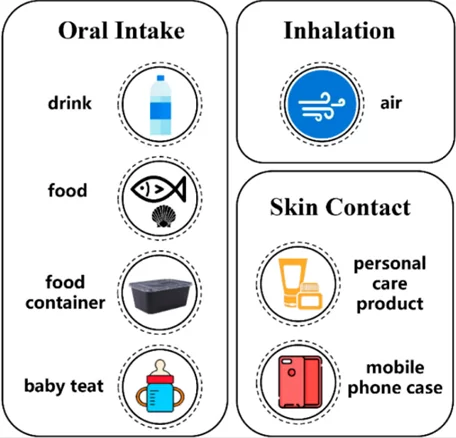
Microplastics can enter the human body via a variety of ways as shown6 in Figure 2 below. The life cycle of microplastics usually begins with the release of primary or secondary microplastics into the terrestrial and aquatic ecosystems, followed by their transport into water systems. Food contaminated with microplastics, particularly seafood, is the primary source of exposure route for humans7.
Figure 2: Ways Microplastics Enter the Human Body
Evidence of Microplastics in the Human Body
Studies have shown accumulation of microplastics from different human biological samples. For example, Wibowo8 et al. collected stool samples from healthy participants from a fisherman community living in the coastal region of Kenjeran, Surabaya, and Indonesia. They found that 50% of the participants were positive for microplastics in their stool, with high-density polyethylene spotted as the most predominant contaminant. Ibrahim9 et al. reported that 100% of the sample collected had microplastic in human colectomy specimens, in which nine out of eleven subjects had colorectal cancer.
In addition, researchers found that samples taken from the human placenta and fetal meconium contained polyethylene, polypropylene, polystyrene, and polyurethane10.
In recent research, microplastic content in the feces of patients with inflammatory bowel disease was greater than that of healthy people. These studies also indicate a strong correlation between the severity of inflammatory bowel disease and fecal microplastics11.
To understand the impact of microplastics in pregnant women, one group studied its effect on pregnant mice and found plastic chemicals in the brain, heart, liver, kidney and lungs of the developing baby 24 hours after the pregnant mother ingested or breathed in plastic particles.
Microplastics Associated Diseases
Epidemiological studies have shown that long-term exposure to microplastics is highly associated with cancer development in humans and animals12. Due to their small size, microplastics can be directly consumed by various marine organisms and contaminate the human food chain via the bioaccumulation process13.
Studies by one group provide direct evidence of plastic consumption in humans that may lead to the development of various cancers14, 15. The toxicological studies revealed higher toxic equivalent factor due to microplastic thus significantly increasing the risk of cancer.
Recently, Kim16 et al. demonstrated that long-term exposure to microplastics can increase the risk of stomach cancer. The presence of microplastics caused the elevated level of cancer-causing protein. In addition, the excess exposure to microplastics caused a decrease in survival rate and an increase in the growth of tumors.
Prata17 et al. and Amato18 showed that microplastic intake might cause chronic inflammation and irritation, leading to deoxyribonucleic acid (DNA) damage and might have a toxicological impact on cancer development.
More studies have linked microplastics to several health problems, including toxicity and carcinogenicity, when consumed by humans19, 20. Due to the small size of microplastics, they have a high ratio of surface area to volume. Materials with a high surface area are highly toxic to cells and tissue and can damage deoxyribonucleic acid (DNA) inside the cells. The damaged DNA can mutate which in turn can lead to cancer14. These studies were corroborated by another group which showed DNA mutation caused by organic pollutants that are attached to microplastics in water21.
Microplastics have also been linked to various immune system problems, such as immune cell death22 as well as intestinal inflammation23. Since humans can ingest microplastics through inhalation, exposure to airborne particles of microplastics may cause asthma, cardiac disease, allergies, and autoimmune diseases14.
Several studies have also linked microplastics to detrimental impacts on the cardiovascular system of humans leading to various health problems24, 25.
Microplastics also contain plasticizers which in turn can have a direct impact on human health. One group of researchers found a direct link of commonly used phosphate plasticizer as endocrine disruptor leading to breast cancer26.
The increasing prevalence of microplastics in consumer foods and beverages, and its impact on the gut microbiome have been widely studied and linked to fatigue, diarrhea, blood in stool, abdominal pain and cramping, reduced appetite and in some cases, leading to cholera, gut dysbiosis, inflammatory bowel disease, irritable bowel disease, chronic bowel disease, metabolic disturbances, and other stomach issues27, 28.
Microplastics Minimization
The microplastic minimization control approach follows an upside-down pyramid29 as shown in Figure 3, starting with prevention, the most favored option, followed by reducing, reusing, recycling, refusing, rethinking, regifting, recovering (7 R’s), and ending with disposal.
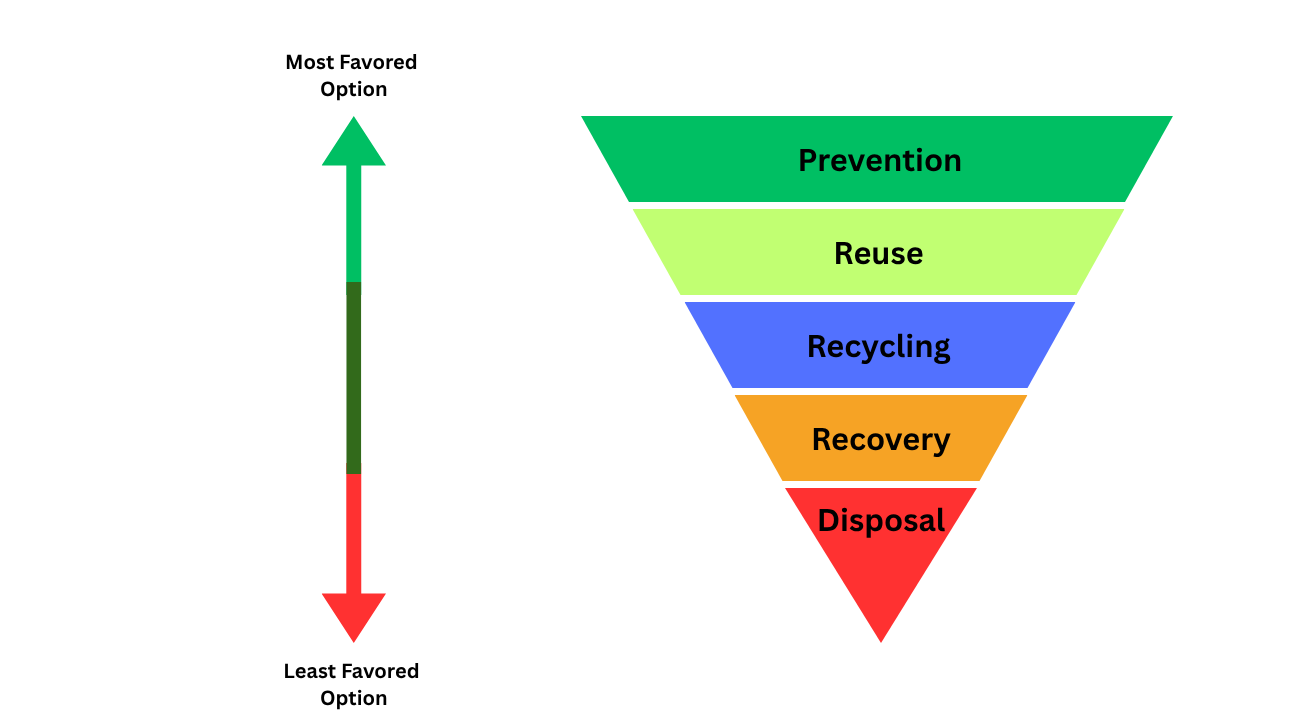
Although Reuse and Recycling of plastics is an effective of managing microplastics, it is not achieved due to a variety of reasons. Consequently, efforts should be focused on Prevention of plastics use.
Using Biodegradable Plastics
Recent studies 30, 31 have shown biodegradable plastics offer a promising solution for replacing conventional plastics to mitigate generation of microplastics. These plastics (e.g. PHA) have been used in various applications such as pharmaceutical packaging 32, agriculture33 and automotive industry34.
SmartSolve Technology – Part of A Solution
SmartSolve’s water-soluble X Series paper technology consists of paper with PVA as heat sealant, both of which are water soluble35, biodegradable in water, and marine biodergradable36. Consequently, as explained above, the X series material is not a source for microplastics37 and offers a game-changing packaging solution for consumer products. More recently, a new technology platform, PureNil, has been developed where the heat sealant resin is bioderived and offers a complete solution towards sustainable packaging.
REFERENCES
- Wang T, et al. Interactions between microplastics and organic pollutants: effects on toxicity bioaccumulation degradation and transport. Sci Total Environ. 2020;748:142427 . doi: 10.1016/j.scitotenv.2020.142427.
- Cessi P, et al. Energetics of semienclosed basins with two-layer flows at the strait. J Phys Oceanogr. 2014;44:967–979. doi: 10.1175/JPO-D-13-0129.1.
- He S, et al. Biofilm on microplastics in aqueous environment: Physicochemical properties and environmental implications. J Hazard Mater. 2022;424:127286. doi: 10.1016/j.jhazmat.2021.127286.
- Xiang Y, et al. Microplastics and environmental pollutants: key interaction and toxicology in aquatic and soil environments. Journal of Hazard Mater. 2022;422:126843. doi: 10.1016/j.jhazmat.2021.126843.
- Kuraray internal document
- Veethaak, A.D., Legler, J., Microplastics and Human Health, Science 2021, 371 (6530), 672-674, doi: 10, 1126/Science.abe5041
- Toussaint B, et al. Review of micro- and nanoplastic contamination in the food chain. Food Addit Contam Part A Chem Anal Control Expo Risk Assess. 2019;36:639–673. doi: 10.1080/19440049.2019.1583381.
- Wibowo AT, et al. Microplastic contamination in the human gastrointestinal tract and daily consumables associated with an Indonesian farming community. Sustainability. 2021;13:12840. doi: 10.3390/su132212840.
- Ibrahim YS, et al. Detection of microplastics in human colectomy specimens. JGH Open. 2021;5:116–121. doi: 10.1002/jgh3.12457.
- Braun T, et al. Detection of microplastic in human placenta and meconium in a clinical setting. Pharmaceutics. 2021 doi: 10.3390/pharmaceutics13070921.
- Yan Z, et al. An efficient method for extracting microplastics from feces of different species. J Hazard Mater. 2020;384:121489. doi: 10.1016/j.jhazmat.2019.121489.
- Karimi F, et al. Quantitative measurement of toxic metals and assessment of health risk in agricultural products food from Markazi Province of Iran. Int J Food Contam. 2021;8:1–7. doi: 10.1186/s40550-021-00083-0.
- Zhao, S., 2022. A Summary of the Transporting Mechanism of Microplastics in Marine Food Chain and its Effects to Humans. IOP Conference Series: Earth and Environmental Science, Vol 1011. IOP Publishing, pp 012051.
- Campanale C, et al. A detailed review study on potential effects of microplastics and additives of concern on human health. Int J Environ Res Public Health. 2020;17:1212. doi: 10.3390/ijerph17041212.
- Sharma MD, et al. Assessment of cancer risk of microplastics enriched with polycyclic aromatic hydrocarbons. Journal of Hazard Mater. 2020;398:122994. doi: 10.1016/j.jhazmat.2020.122994.
- Kim H, et al. Enhanced ASGR2 by microplastic exposure leads to resistance to therapy in gastric cancer. Theranostics. 2022;12:3217. doi: 10.7150/thno.73226.
- Prata JC, et al. Environmental exposure to microplastics: an overview on possible human health effects. Sci Total Environ. 2020;702:134455. doi: 10.1016/j.scitotenv.2019.134455.
- Amato-Lourenço L. F., et al. Presence of airborne microplastics in human lung tissue. Journal of Hazardous Materials. 2021;416:126124. doi: 10.1016/j.jhazmat.2021.126124.
- Gasperi J. Microplastics in air: Are we breathing it in? Current Opinion in Environmental Science & Health. 2018;1:1–5. doi: 10.1016/j.coesh.2017.10.002.
- Blackburn K, Green D (2022) The potential effects of microplastics on human health: what is known and what is unknown. Ambio 51:518–530. 10.1007/s13280-021-01589-9
- Mishra G, Rahi S. Need of toxicity studies for cosmetic products and their approaches. Biol Sci. 2022;2:105–109. doi: 10.55006/biolsciences.2022.0201.
- Sun K, et al. A review of human and animals exposure to polycyclic aromatic hydrocarbons: health risk and adverse effects, photo-induced toxicity and regulating effect of microplastics. Sci Total Environ. 2021;773:145403. doi: 10.1016/j.scitotenv.2021.145403.
- Carr KE et al (2012) Morphological aspects of interactions between microparticles and mammalian cells: intestinal uptake and onward movement. Prog Histochem Cytochem 46:185–252. 10.1016/j.proghi.2011.11.001
- Lett Z, et al. Environmental microplastic and nanoplastic: Exposure routes and effects on coagulation and the cardiovascular system. Environ Pollut. 2021;291:118190. doi: 10.1016/j.envpol.2021.118190.
- Posnack NG. Plastics and cardiovascular disease. Nat Rev Cardiol. 2021;18:69–70. doi: 10.1038/s41569-020-00474-4.
- Böckers M, et al. Organophosphate ester tri-o-cresyl phosphate interacts with estrogen receptor α in MCF-7 breast cancer cells promoting cancer growth. Toxicol Appl Pharmacol. 2020;395:114977. doi: 10.1016/j.taap.2020.114977.
- Tamargo A, et al. PET microplastics affect human gut microbiota communities during simulated gastrointestinal digestion, first evidence of plausible polymer biodegradation during human digestion. Sci Rep. 2022;12:1–15. doi: 10.1038/s41598-021-04489-w.
- Rawle DJ, et al. Microplastic consumption induces inflammatory signatures in the colon and prolongs a viral arthritis. Sci Total Environ. 2022;809:152212. doi: 10.1016/j.scitotenv.2021.152212.
- Tsui T-H, Wong JW. A critical review: emerging bioeconomy and waste-to-energy technologies for sustainable municipal solid waste management. Waste Disposal & Sustain Energy. 2019;1:151–167. doi: 10.1007/s42768-019-00013-z.
- Farghali M et al (2022b) Seaweed for climate mitigation wastewater treatment bioenergy bioplastic biochar food pharmaceuticals and cosmetics: a review. Environ Chem Lett 21:97–152. 10.1007/s10311-022-01520-y
- Dhaka V, et al. Occurrence, toxicity and remediation of polyethylene terephthalate plastics A review. Environ Chem Lett. 2022 doi: 10.1007/s10311-021-01384-8.
- Filiciotto L, Rothenberg G. Biodegradable plastics: Standards, policies, and impacts. Chemsuschem. 2021;14:56–72. doi: 10.1002/cssc.202002044.
- Zhang C, et al. A sustainable solution to plastics pollution: an eco-friendly bioplastic film production from high-salt contained Spirulina sp. residues. J Hazard Mater. 2020;388:121773. doi: 10.1016/j.jhazmat.2019.121773.
- Moshood TD, et al. Sustainability of biodegradable plastics: a review on social, economic, and environmental factors. Critical Rev Biotechnol. 2021;1–21:892–912. doi: 10.1080/07388551.2021.1973954.
- SSI internal document on water solubility
- End of Life of Heat Seal X series summary report
- SmartSolve Microplastics Free

Director of Flexible Packaging