
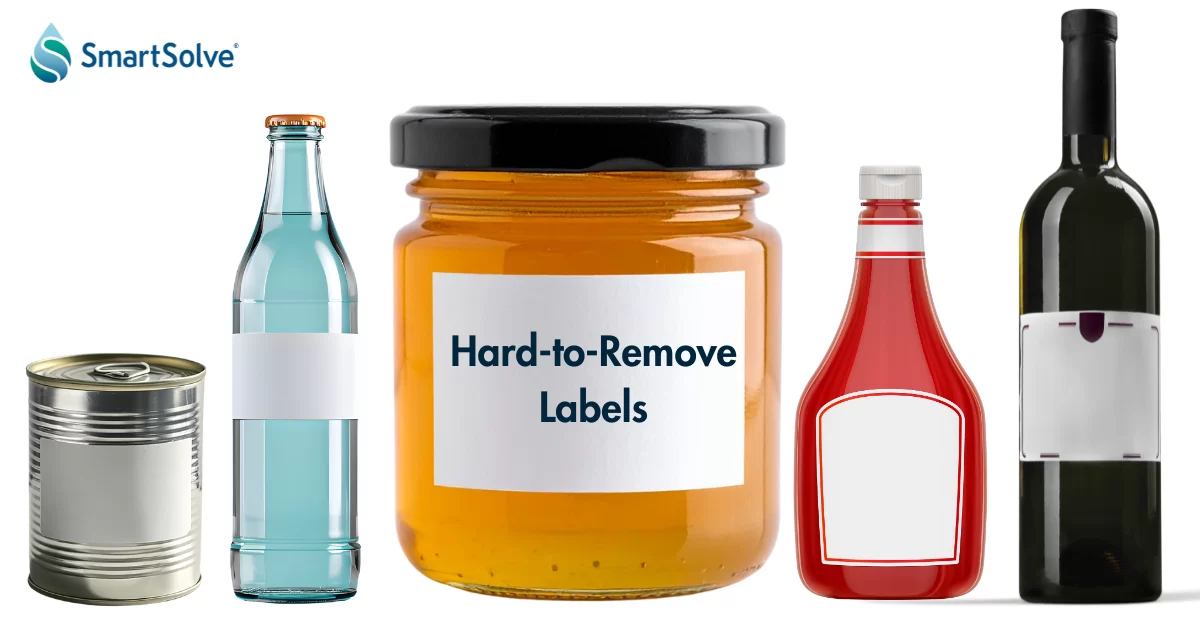
We’ve all been there: standing at the sink, scrubbing furiously at a hard-to-remove label stuck to a new jar, window, or device. Maybe it’s a pasta sauce jar that just won’t come clean, or a new pair of sunglasses with a brand sticker right in the middle of the lens.
While it might feel like a small annoyance, the reality is much bigger. Sticky labels and label residue aren’t just frustrating for consumers—they create serious hurdles for recycling systems and sustainability initiatives worldwide.
As brands across industries push toward circular packaging strategies, one sticky problem remains overlooked: the lack of truly removable labels. Thankfully, new innovations are emerging to solve this hidden challenge and drive us toward a cleaner, more sustainable future.
Sticky Labels on Everyday Products: Where the Problem Shows Up Most
Beyond personal electronics and appliances, sticky labels create even bigger challenges on common packaged goods.
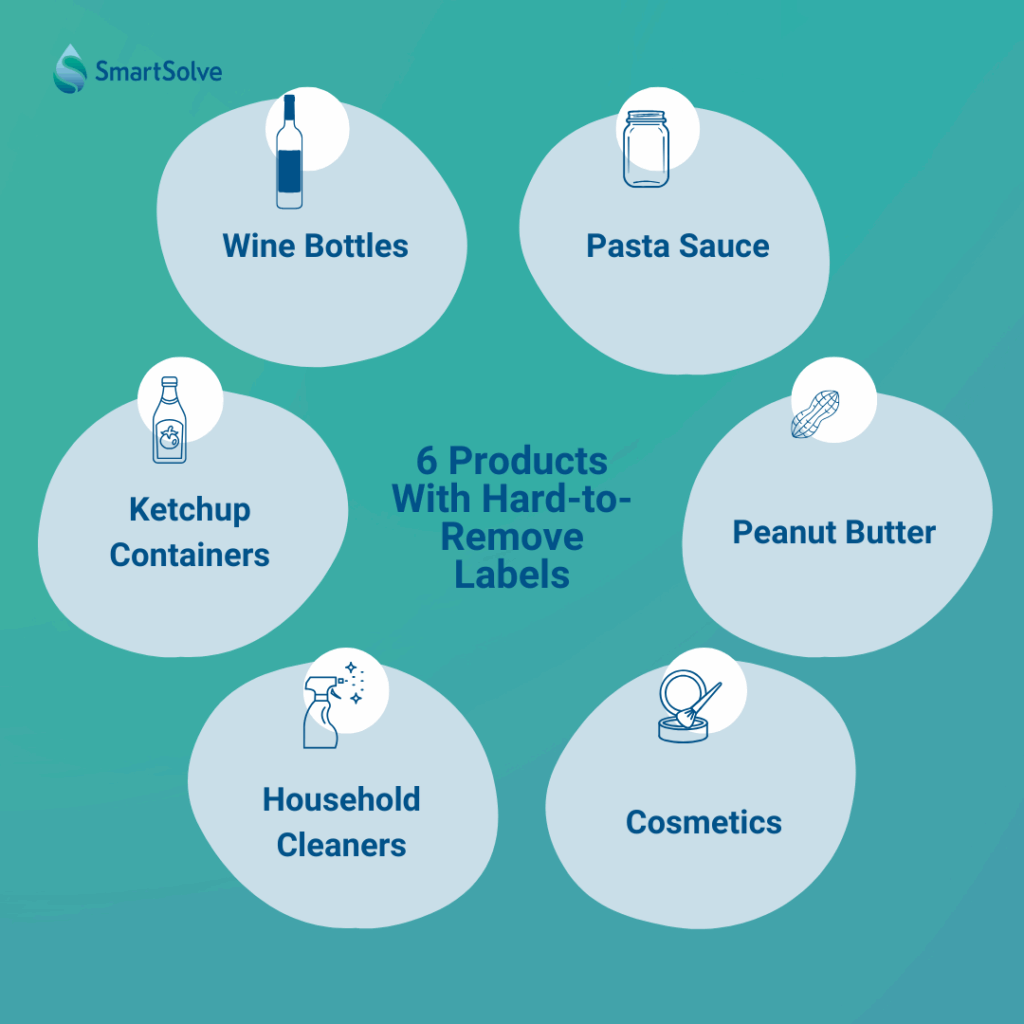
Here’s where the problem of hard-to-remove labels becomes a real recycling roadblock:
- Pasta sauce jars often retain glue and bits of the label even after vigorous washing, making them harder to recycle cleanly.
- Peanut butter jars made of plastic tend to hold onto stubborn adhesives that resist removal.
- Makeup packaging like lipsticks, powders, and foundation bottles frequently leave label residue that sticks no matter how carefully you peel.
- Wine bottles are another offender; heavy paper labels secured with powerful adhesives make clean glass recovery a challenge.
- Condiment containers – like ketchup, mustard, and salad dressings – are typically wrapped in labels that leave behind stubborn tackiness.
- Home cleaning products add another layer of difficulty: spray bottles and detergent containers often use labels that won’t budge easily, slowing down recycling efforts.
When labels don’t easily separate, even highly recyclable materials like glass or PET plastic can be rejected from recycling streams due to contamination.
Packaging Leaders: Here’s Why Sticky Label Residue Is More Than Just a Nuisance
For consumers, encountering hard-to-remove labels is a frustrating experience that can diminish brand perception. Scraping at sticky remnants can lead to scratched surfaces, marred products, and wasted time. Even after vigorous cleaning, label residue often lingers, making the product look and feel dirty. For consumer packaged goods like cosmetics, home goods, or electronics, the presence of leftover adhesive damages the product’s appeal long after purchase.
But the consequences don’t stop at consumer frustration.
Sticky adhesives and non-removable labels wreak havoc on recycling processes. Adhesives left on plastic, glass, or metal surfaces can contaminate recycling streams, forcing facilities to reject entire batches of otherwise recyclable materials. Automated recycling systems struggle to sort materials properly when sticky residues interfere, reducing overall recycling efficiency and increasing costs.
Industry leaders like SC Johnson have pointed out that even when packaging materials are designed to be recyclable, sticky labels often sabotage the process. When labels can’t be easily removed, the packaging itself—no matter how sustainable in theory—becomes part of the waste problem.
A Smarter Way Forward: The Rise of Removable Labels
For brands committed to improving customer experience and achieving real sustainability gains, the solution lies in removable labels – specifically those engineered to fully disperse during standard recycling or rinsing processes.
Innovative packaging alternatives like SmartSolve’s water-soluble material offer a breakthrough. Designed to work seamlessly with existing packaging and printing equipment, SmartSolve labels enable the top layer (such as paper) to wash away or separate, depending on its use case. This leaves behind a clean recyclable material without sticky adhesives contaminating the stream.
Consumers enjoy a clean, frustration-free experience. Recycling facilities receive pure, sortable materials. And brands get closer to their goals of creating fully recyclable, circular packaging systems.
The future of packaging innovation is clear: Removable labels are essential for brands serious about sustainability.
Ready to rethink your label strategy? Explore how SmartSolve can help you drive innovation while delivering on your sustainability commitments.