
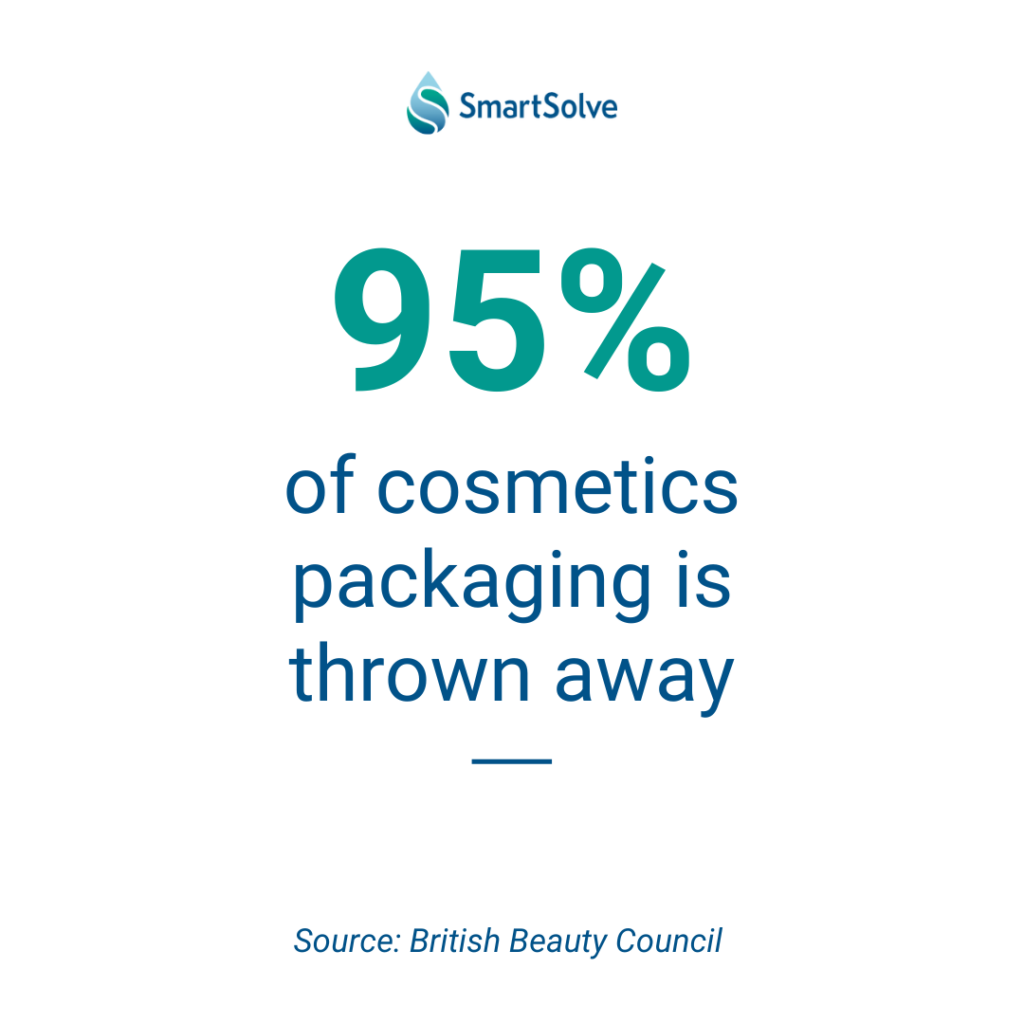
It’s a “sad but true” fact that the beauty industry is responsible for a sizable portion of plastic waste. Most cosmetic packaging (95% in fact) is thrown away due to the vast majority of beauty products marketed and sold as single use. And by and large, the majority of beauty products sold today in stores is made of plastic.
But the beauty industry isn’t slowing down anytime soon. With the boom of beauty influencers inspiring their followers to “get ready with me,” celebrity brands making a name for themselves in the industry, and ecommerce platforms like Amazon making it easier than ever to buy a lip kit in a single click. Luckily, some innovative leading brands are proving it’s possible to achieve incredible business success while transitioning to more eco-friendly practices. In this blog, we’ll reveal 7 Beauty Brands with Recycling Programs.

Why Sustainability in The Beauty Industry Matters
While it’s obvious that the buildup of single-use plastic from cosmetic products in landfills and waterways is clearly a main focus of sustainability in beauty, it’s not the only area that benefits from these more eco-friendly materials and practices. Consumers care about sustainability. In a recent NIQ survey, almost 70% of consumers say sustainability has become more important to them over the last two years, but 25% feel that brands aren’t making it easy for them to prioritize it.
Some quick facts on the importance of sustainability in cosmetics:
- 65% of cosmetics packaging is made from plastic.
- A whopping 95% of cosmetic packaging is thrown away.
- 70% of that packaging ultimately ends up in landfills.
- 33% of consumers say they would spend between 5-9% more on a beauty product if they were to be sustainable.
7 Beauty Brands with Recycling Programs
1. Aveda Promotes Sustainable Beauty with Their Take Back Program
Aveda has long been a pioneer in sustainability (in 1989, Aveda signed the Valdez CERES Principals which pledged corporate environmental sustainability), and their Takeback Programme is a testament to their commitment to environmental stewardship.
Through this program, UK customers can return used Aveda packaging at participating locations to be recycled or repurposed responsibly. The program accepts items that are difficult to recycle through curbside programs like bottle caps, pumps and tubes. Aveda is just one brand making it clear beauty enthusiasts can reduce waste while indulging in the cosmetics they’ve always loved.
3 easy steps to recycle Aveda products:
- Recycle what you can of your Aveda beauty empties at home
- Bring back clean Aveda empties that can’t be recycled at home to participating salons
- Put your qualifying empties in AVEDA Full Circle Takeback collection box
A downside to Aveda’s takeback program is that as of today, the program only operates in the UK.
2. BEAUTYCYCLE: Nordstrom’s Beauty Recycling Program
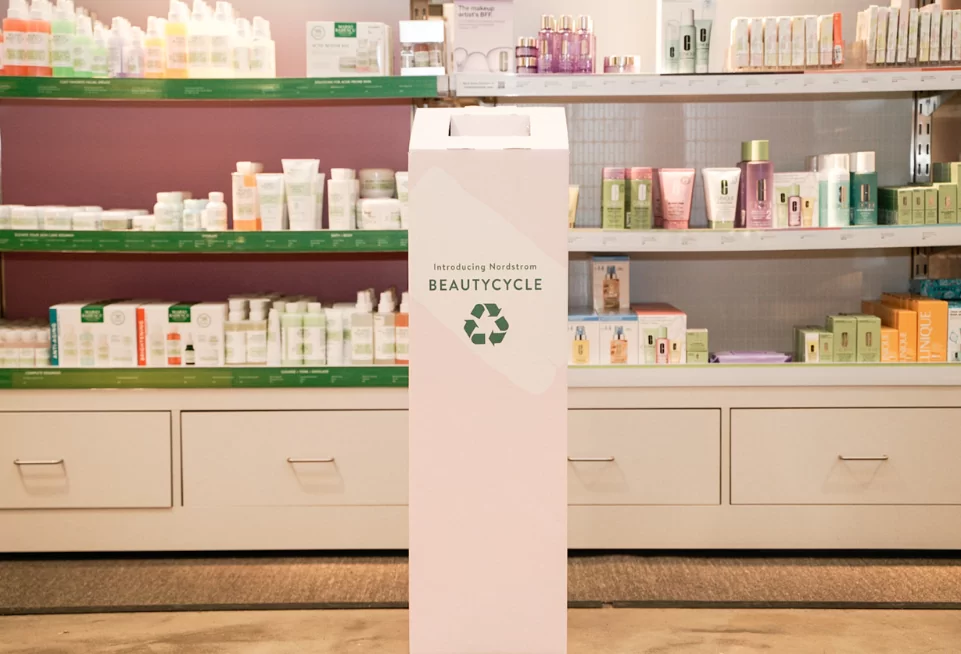
Nordstrom is an example of a brand making it easier than ever to support sustainable beauty practices, no matter the brand you use. With a goal to take back 100 tons of beauty packaging by 2025, Nordstrom launched BEAUTYCYCLE – a program designed to make recycling beauty products more accessible for everyone. Customers can bring empty beauty and skincare packaging from any brand to Nordstrom stores, where they will be properly recycled.
The program accepts items like pump dispensers, makeup palettes, and mascara tubes, which often can’t be processed in regular recycling streams. BEAUTYCYCLE is free for consumers.
3. MAC Cosmetics Take Back Program
The Back to MAC program is MAC Cosmetics’ long-standing takeback program – one of the first in the industry. Customers can return six empty MAC containers to participating stores or counters and receive a free MAC lipstick of their choice as a reward.
The program accepts primary packaging, including compacts, lipsticks, and foundation bottles, ensuring these items are diverted from landfills. This initiative reflects MAC’s dedication to reducing their environmental impact while giving customers an incentive to participate.
How the MAC Cosmetics take back program works:
- Return your eligible, clean MAC empties to a participating MAC counter in-store or online.
- Recyclable products will be shredded, washed, re-pelletized and recycled, and ultimately made into new materials.
- Any packaging that can’t be recycled gets converted into energy.
MAC’s takeback program has already had a measurable impact on sustainability. In 2024, MAC processed over 271,000 pounds of containers through the program – the equivalent of over 2.5 million lipsticks.
4. “Recycle and Be Rewarded” When You Participate in Kiehl’s Recycling Program
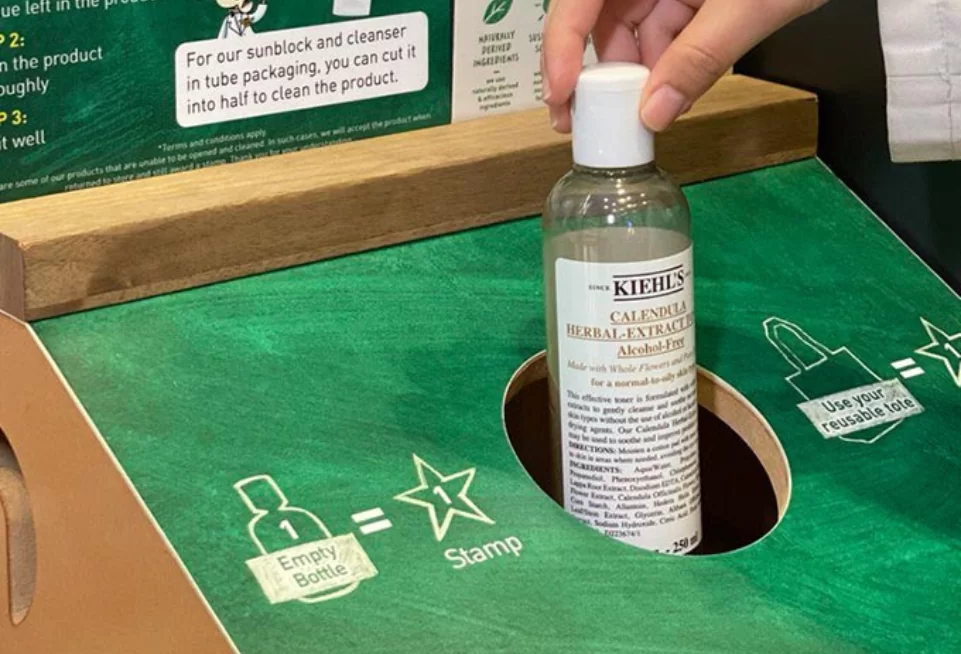
Kiehl’s gamifies recycling through their loyalty-based recycling program Recycle and Be Rewarded. By returning empty Kiehl’s packaging to a store, participants earn points toward rewards like free products. For customers who don’t have access to a nearby store, they can recycle products online. The catch, however, is that the online process doesn’t provide rewards like the in-person version.
The program is part of Kiehl’s efforts to minimize packaging waste and promote responsible consumption. Whether it’s jars, bottles, or tubes, customers can recycle them while enjoying perks for their eco-conscious efforts.
5. Credo Beauty Walks the Walk with Pact Recycling Program
Credo Beauty tackles hard-to-recycle beauty packaging to reduce waste in the industry head-on. They co-founded Pact, a nonprofit organization working to change the way beauty packaging is designed and disposed of.
Through Pact, customers can bring empty beauty containers—like mascara tubes, lotion pumps, and lip gloss applicators—from any brand to Credo stores for proper recycling. Credo’s program also incentivizes recycling by rewarding customers who recycle their empties with Credo Rewards Points. Through their organization and practices, Credo Beauty is empowering consumers to make sustainable choices.
6. Garnier’s Free Recycling Program With TerraCycle
Garnier has teamed up with TerraCycle, a waste management organization that collects and recycles non-locally recyclable waste, to create a free recycling program for beauty and personal care packaging. Participants can sign up for the program online, collect their empty Garnier products, and send them to TerraCycle for processing at no cost. Through this program, Garnier has diverted more than 11 million beauty empties from landfills.
This initiative goes beyond Garnier-branded products, accepting a wide range of items to promote recycling in the beauty industry. Garnier’s partnership with TerraCycle is one example of the brand’s dedication to reducing waste and promoting sustainability industry-wide.
7. The Body Shop’s Refill Program
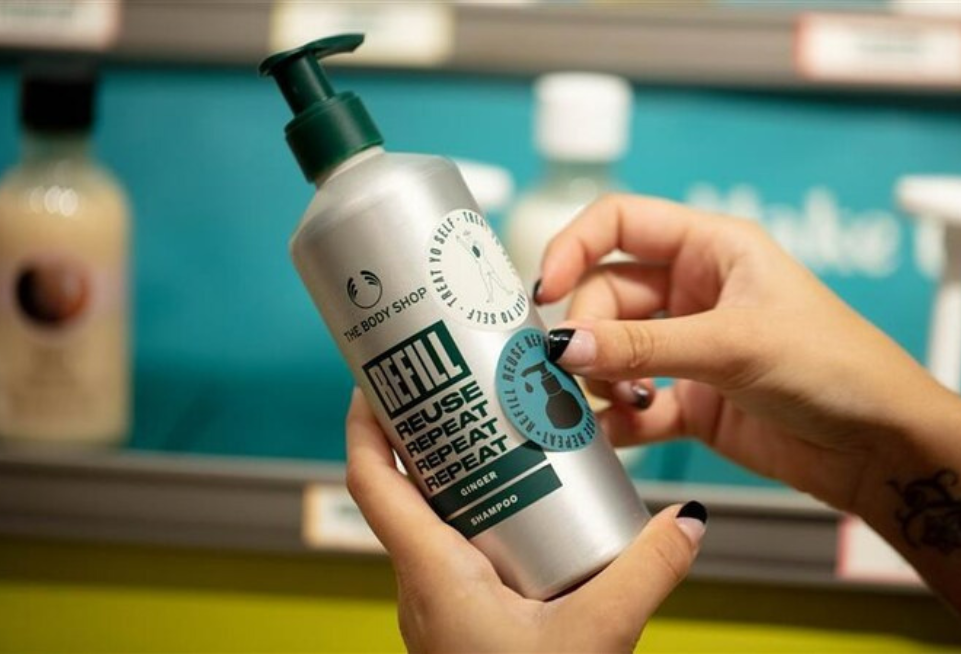
The Body Shop is reimagining sustainable beauty with their Refill Program, which encourages customers to reduce single-use packaging. Shoppers can purchase reusable aluminum bottles and refill them at The Body Shop stores with a selection of their products including shampoos, conditioners, and shower gels. The brand reported that in 2022 alone, more than half a million plastic bottles were diverted from entering the environment.
Available at participating stores, this program is a simple yet impactful way to lower packaging waste and embrace a more sustainable beauty routine. Refill stations are available in 800 stores around the world, and The Body Shop US now offers refill stations in 50% of its stores.
Join the Beauty Recycling Revolution
These seven iconic brands are just a few examples of how the beauty industry as a whole is evolving to address urgent environmental issues, but also meet the rising demand of their customers for more eco-friendly practices and products. By taking a few small steps to reduce, reuse and recycle, beauty brands and product enthusiasts can make a big impact in transforming sustainable beauty for decades to come.
______________

Digital Content Coordinator