

A practice that has become the standard for sustainability to most Americans is recycling – the process of which commodity-grade materials like metal, plastics, paper, and rubber are collected, processed and sold back as feedstock for the manufacturing of new products.
The packaging industry – which uses plastic as its primary material due to its cost effectiveness and versatility – has embraced recyclable materials like polyethylene terephthalate (PET) and high density polyethylene (HDPE). While leveraging recyclable materials has been a step in the direction of more sustainable manufacturing practices, the fact is, recycling alone isn’t enough to make the necessary positive impact on the environment.
Reduction – the practice of using less materials – in packaging is emerging as a revolutionary practice with proven sustainability benefits. While recycling alone has shown to reduce greenhouse gas emissions by just 2-3%, reducing consumption can reduce emissions by up to 20%.
Why Recycling Isn’t the Only Answer to Sustainable Packaging
While recycling is a well-intentioned sustainable practice in the packaging industry and has been since the late 1900s, the reality is that most packaging waste still ends up in landfills due to limitations in current recycling practices and infrastructure. In fact, scientists estimate just 9% of plastic ever gets turned into something new from recycling. 79% accumulates in landfills or the natural environment, and 12% is incinerated.
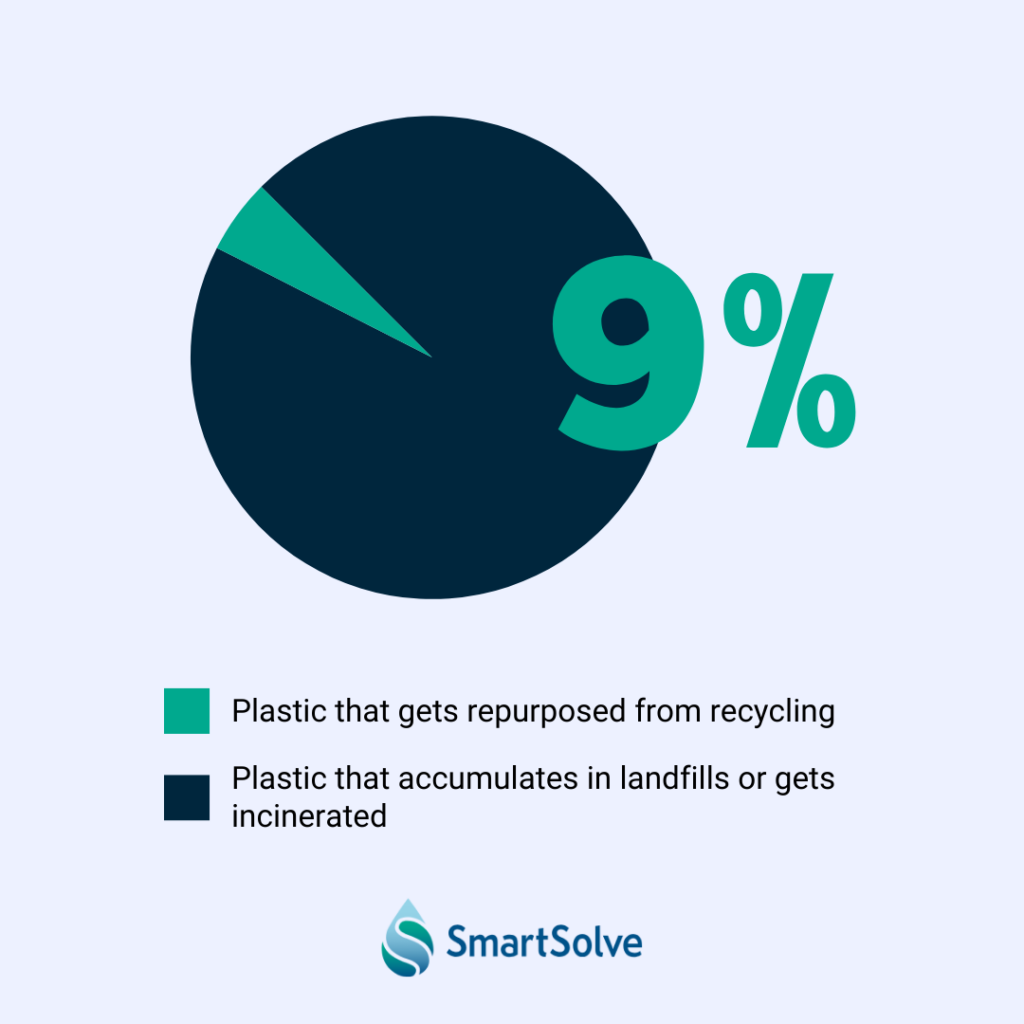
Plastic is expensive to collect and sort, and today’s recycling facilities are drastically ill-equipped to handle the amount of recycling that would be needed to make a real dent in reducing emissions.
Another issue of concern of recycling as a solution to sustainability is that it’s a resource- and energy-intensive process. Recycling requires energy, water, and transportation resources, undercutting its environmental benefits. While it takes significantly less energy to recycle something versus making the product from scratch, it’s still not a perfect sustainable solution.
Next, there comes the consideration of material type and efficacy when it comes to recycling. First and foremost, not all materials are recyclable. Some materials – once used in manufacturing – cannot be processed again due to their chemical bonds, biodegradability and other factors.
Here are just a few non-recyclable materials often used in packaging:
- A variety of plastics, including bioplastics, thermoset plastics and polycarbonate
- Bubble wrap or blister packaging
- Styrofoam (made from non-recyclable polystyrene)
- Packaging peanuts (also made from polystyrene)
- Mixed-use plastics used in multi-layer packaging like chip bags and candy wrappers
From evolving consumer demands to sustainability standards, a shift toward reduction-first practices can transform the packaging industry – and the world as whole – for the better.
The State of the Packaging Industry Today & Why Plastic Reduction Needs to Be the Priority
With the rise of ecommerce as well as economic and development growth, the packaging industry has never been stronger: it’s set to reach an estimated $1.58 trillion by 2032. In conjunction with the increasing demand for new and innovative packaging options is an added expectation for more sustainable options. And while sustainability has emerged as a key factor for many brands in their packaging decision-making, the industry is still leaning heavily on recyclability to do the job. Many decision makers aren’t yet fully aware of more sustainable packaging alternatives or assume it’ll be too expensive to swap in for their recyclable materials.
In the early aughts through present day, a number of standards and legislation have been brought forth to enforce and influence sustainability in packaging, from the Packaging Reduction and Recycling Infrastructure Act brought forth by the state of New York to the Packaging and Packaging Waste Directive in the European Union. The latter sets waste reduction targets of 5% by 2030, 10% by 2035, and 15% by 2040. Additionally, advocacy groups like the Sustainable Packaging Coalition aim to affect change throughout the industry by bringing together like-minded packaging stakeholders. These initiatives demonstrate a growing importance on more sustainable packaging practices beyond just consumer demands.
So why is it a struggle for brands to offer more sustainable packaging? Obstacles like cost, supply chain complexities, and regulatory requirements make recycling and sustainability claims complicated.
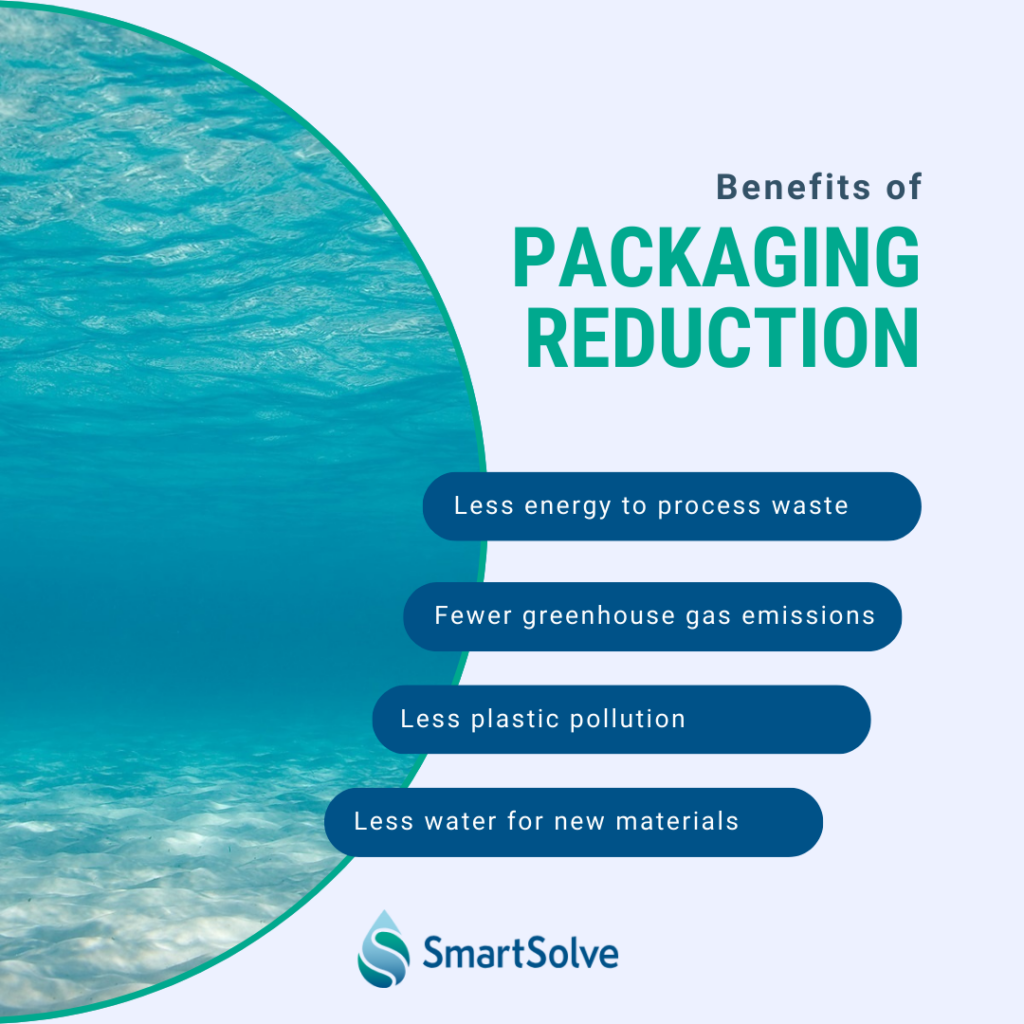
That’s where reduction comes in. Simply put, less is more when it comes to true sustainability. Less packaging means:
- Less energy required to handle and process waste
- Fewer greenhouse gas emissions produced from landfills
- Less plastic pollution threatening wildlife, ecosystems and even human health
- Less water and other resources to produce new materials from recycled materials
Reduction in plastic packaging also helps to offset strains on the supply chain. From natural disasters to post-pandemic production slow-downs, many manufacturers have been affected by disruptions in supply chain and sourcing. By reducing packaging, fewer materials go a longer way.
The Future is Bright: Innovations in Sustainable & Zero-Waste Packaging Materials
From multi-purpose design to water soluble labels, innovations in packaging paint a bright picture of the future of sustainable manufacturing, leading with reduction.
Water-Soluble Materials Leave Behind No Trace
Cutting-edge materials like water-soluble labels and pouches are emerging as a key sustainable packaging solution. Because they break down easily and reduce post-consumer waste, these sustainable alternatives to traditional packaging materials are poised to reach an estimated $5.3 billion by 2032.
SmartSolve, a leader in innovative and sustainable packaging and labels, creates water-soluble packaging materials made from wood pulp fibers and cellulose that disperse completely when in contact with water, eliminating any leftover waste. Its label technology is proven by an independent lab to improve the recyclability of PET plastics, since both the face of the label and the adhesive washes off entirely during the recycling wash process, leaving behind a pure plastic granule.
Replacing Single-Use Plastics with Paper
(In applicable situations)
Biodegradable or compostable packaging is another trend in sustainable packaging design. Biodegradable materials can break down into natural substances (like water, carbon dioxide, and biomass) over time due to the action of microorganisms. These types of materials are typically made from bioplastics, paper, or even plant-based materials like seaweed or mushroom.
However, there’s a significant downside to biodegradable packaging materials: they often require specific environmental conditions to break down efficiently. Many biodegradable plastics, for instance, need high temperatures, controlled moisture, and microbial activity that are only found in industrial composting facilities.
When traditional materials claim to be “biodegradable” without testing that requires a timeframe and environment condition, this leads to greenwashing – conveying a false impression or misleading information about a product’s environmental sustainability. This is because essentially everything is biodegradable, though it may take several hundred years to happen. This is why testing like ISO 14851 is important, which is a pass/fail test to determine if a material is 100% biodegradable within 30-days or not. There is another international standard used to measure biodegradability, called OECD 301B, which says a material has to achieve 60% biodegradation within 28 days.
Smart Design for Reusability
A third trend that’s emerging out of the push for less waste in packaging is a focus on design for reuse. Some brands, for example, are creating convertible packaging that allow the consumer to transform it into useful items after serving its primary purpose.
Other brands are developing solutions that support a circular economy, like TerraCycle’s Loop which enables the sale and collection of reusable versions of typically single-use products.
Another creative innovation in packaging reuse is edible materials. Some brands use seaweed, rice and other starches to create edible wrappers for single-serve foods.
How to Make Reduction a Core Sustainability Strategy
By now, it’s clear that plastic reduction is the future of the packaging industry. From limitations in recycling to achieve true sustainability to promising, innovative, and zero-waste alternatives, industry trailblazers are looking ahead to the next generation of packaging.
So, what are the next steps to building reduction into a packaging framework? Follow these core components of a sustainable packaging strategy.
- Prioritize material efficiency in design – Opt for materials that require less processing and are easily dissolvable or biodegradable, with credible testing to make such claims.
- Collaborate with innovative material suppliers – Partnering with suppliers who specialize in reduced-material or alternative packaging solutions, like SmartSolve water-soluble materials.
- Adopt lifecycle assessments – Use lifecycle assessments (LCAs) to understand the full environmental impact of their packaging choices and identify reduction opportunities.
- Consumer education on packaging disposal – Educate consumers on proper disposal and the benefits of reduced-material packaging for maximum environmental impact.
Innovations in reduction make sustainability convenient, practical, and sometimes even rewarding for consumers, aligning with a broader shift towards circularity and environmental responsibility in packaging. As more companies adopt these approaches, we’re likely to see significant reductions in single-use plastic packaging waste.