

Like all industries, consumers and brands alike are seeking out more eco-friendly alternatives to feminine care products, materials and packaging. With a massive portion of the population requiring menstrual hygiene products at any given time, the market is proportionally large and not slowing down anytime soon – Statista estimates it generated nearly $50 billion in revenue worldwide in 2024, a growth of 5.3%. Feminine hygiene products which include products like pads, tampons, menstrual cups and intimate wipes are indispensable during menstruation, providing comfort and cleanliness during a cycle.
But like most single-use products, their life cycles lead to pollution in landfills and oceans and contribute to microplastics in the human population. And with such a significant usage over a single menstruating person’s life – each menstruator will use and dispose of between 5,000 and 15,000 pads and tampons in their lifetime! – finding more sustainable options is critical.
What Does “Eco-Friendly Tampon” Mean, Exactly?
Eco-friendly menstrual care can encompass a wide variety of products and packaging. Essentially, eco-friendly tampons are designed with minimal environmental impact throughout their life cycle, from production to disposal. Conventional tampons contain synthetic fibers, plastics and chemicals that accumulate in ecosystems and result in bioplastics that can impact human health. Eco-friendly tampons, however, may use biodegradable and/or organic materials that more easily break down, reducing landfill build-up, and are produced with more eco-friendly methods that avoid harsh chemicals like bleach.
Another essential component of a more sustainable tampon is packaging. Because these products are single-use, their wrappers and boxes contribute to landfill waste as well as the applicators and absorbent core.
Here are some of the materials that may be used in eco-friendly tampons:
Organic cotton: The primary material in sustainable tampons, organic cotton is grown without pesticides or synthetic fertilizers, making it safer for both the environment and the user. Organic cotton is also free from chlorine bleaching, reducing harmful chemical residue.
Biodegradable or dissolvable wrappers and applicators: Many sustainable tampons use compostable, biodegradable or even water-soluble wrappers made from materials like cornstarch-based bioplastics or cellulose. Applicators are often made from plant-based bioplastics or cardboard, which break down more readily in the environment than traditional plastic.
Compostable elements: Some brands have begun offering fully compostable tampons or tampons packaged in compostable materials that allow for more environmentally friendly disposal.
Sustainable Tampon Packaging: An Easy, Eco-Friendly Swap to Meet Consumer Demands
One of the most consequential elements of a product to determine how eco-friendly it is (or isn’t) is its packaging. The same holds true for tampons and other feminine care products. Packaging contributes significantly to the overall environmental footprint of tampons, not only through the materials used but also in its potential to create waste or be recycled.
By choosing eco-friendly materials and reducing excess packaging, companies can align with consumer values and market demands for low-impact products. This is especially relevant for tampons, which are often individually wrapped and used frequently (over seven billion tampons are disposed of each year!), making it essential to minimize the packaging waste associated with each item.
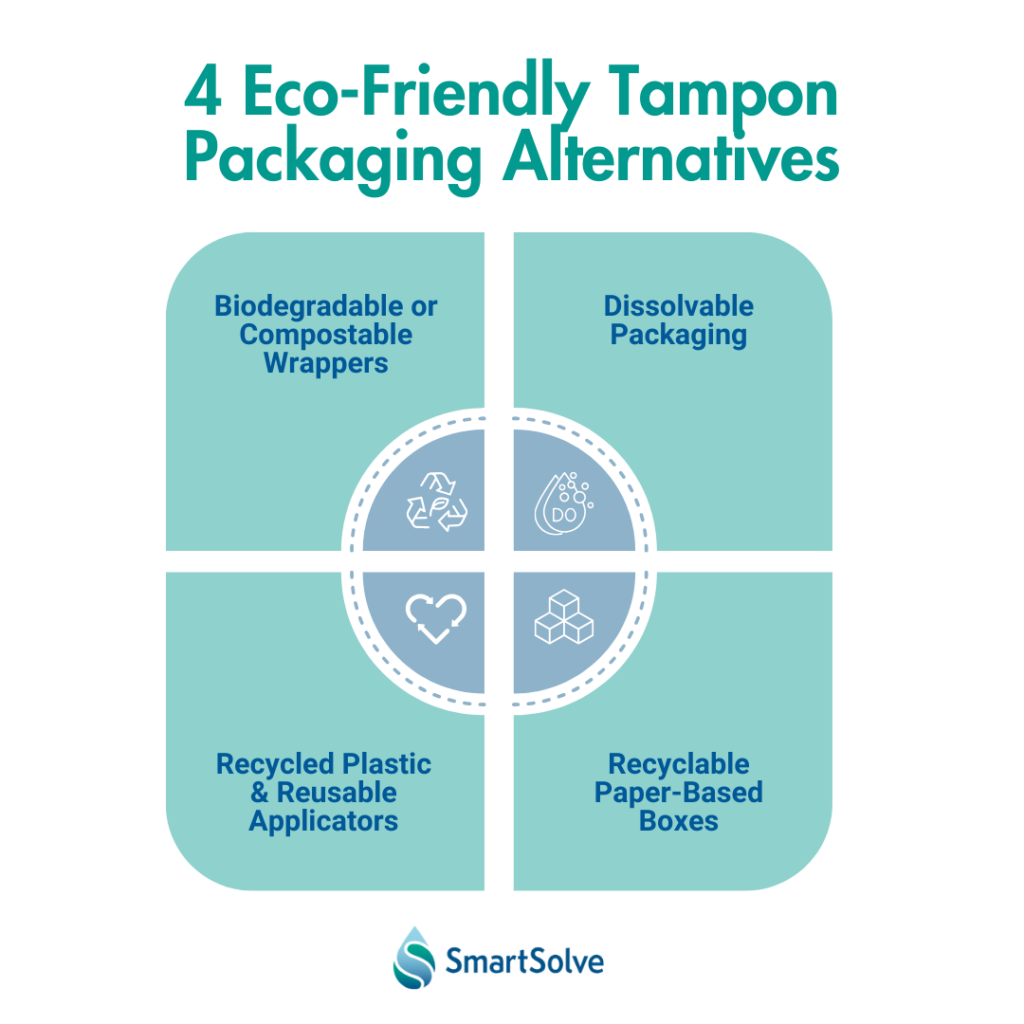
4 eco-friendly tampon packaging alternatives
Now that you understand the role packaging plays in sustainable tampons, let’s explore four common alternatives to traditional tampon packaging.
- Biodegradable or Compostable Tampon Wrappers: Biodegradable and compostable wrappers are made from materials that decompose naturally, reducing long-term waste. These wrappers can be made from plant-based materials like PLA (polylactic acid) derived from cornstarch or cellulose, which break down in compost or natural environments. Compostable wrappers ensure that even single-use tampon packaging can return to the earth without polluting it, aligning well with a brand’s sustainability mission.
- Dissolvable Tampon Packaging: Water-soluble or dissolvable tampon packaging is a zero-waste solution to tampon packaging. This new innovation allows certain packaging components to break down upon contact with water, leaving minimal or no trace. Made from materials like PVA (polyvinyl alcohol) or cellulose, this type of packaging can be disposed of with minimal environmental impact. Water-soluble packaging is a potential solution for individual wrappers, offering a unique alternative to traditional, non-recyclable plastic wrappers.
- Recyclable Paper-Based Tampon Boxes: Many companies are moving away from plastic outer wraps and adopting paper-based boxes made from FSC-certified (Forest Stewardship Council) paper and cardboard. These boxes are fully recyclable, making them easier for consumers to dispose of responsibly. Paper-based packaging can also be made with recycled content, adding an additional layer of sustainability by minimizing the need for virgin paper.
- Recycled Plastic and Reusable Applicators: Some brands are opting to use post-consumer recycled (PCR) plastic for tampon applicators, reducing the demand for new plastic production. Additionally, reusable applicators made from durable, high-quality materials offer an alternative to single-use plastic applicators. These applicators can be sanitized and used repeatedly, greatly reducing the waste associated with disposable options and appealing to consumers seeking long-term solutions.
5 Inspiring Brands Leading the Charge in Sustainable Tampons & Packaging
Daye
Daye focuses on creating sustainable products and services that bridge the gender gap via science and innovation. Daye tampons are made with 100% organic cotton and contain no plastic. Plus, they come in applicators made from renewable sugarcane. Incredibly, Daye tampon wrappers are flushable and ocean-safe, designed with water soluble material made by SmartSolve.
The Honey Pot
Self-described as plant-derived feminine care, The Honey Pot was founded by Bea Dixon after she suffered from bacterial vaginosis and found a solution in feminine hygiene products made from plant-derived ingredients. Their tampons are made from organic cotton and are biodegradable and compostable. The tampon packaging is made from recyclable materials.
Natracare
Touted as the “world’s first organic tampon,” Natracare was created as a campaign to improve the feminine care industry by offering viable eco-friendly alternatives to traditionally carbon-heavy products. Natracare tampons are made with 100% organic cotton and come with plastic-free, compostable applicators. Their tampons come in biodegradable wrappers, and their packaging is made from recycled, recyclable cardboard.
Rael
Founded by three Korean American women, Rael products are designed with “clean ingredients inspired by nature.” Rael tampons are made with a certified organic cotton core and veil and housed in a biodegradable cardboard applicator. Their packaging focuses on recyclable and minimalistic design to reduce waste.
Cora
Cora is driven by a mission to provide period care access to everyone who needs it, without exception. With each Cora purchase, they provide period products and other resources to those who need them. Cora’s tampons are made with 100% organic cotton, and their packaging is made from recyclable paper-based boxes and plant-based wrappers for individual tampons.
Get started with eco-friendly tampons & packaging
The demand for sustainable menstrual care and other feminine products is only growing. Sustainability-minded consumers – especially younger buyers like Gen Z and Millennials – are more informed than ever before about the impact of single-use products on the environment. Recent market studies show significant growth in sustainable feminine hygiene, with consumers willing to pay more for organic, non-toxic, and environmentally friendly options.
By taking note of innovations in tampon material, design and production, and packaging, brands can get ahead of consumer trends and meet their eco-conscious customers where they are.
Learn More
To learn more about SmartSolve’s product offerings and how you can use them for your specific application, request a sample or contact our team today.