
Balancing cost, compliance, and sustainability isn’t easy, and yet, it’s become table-stakes for agriculture brands. As organic soil and fertilizer producers expand, they’re navigating tighter regulations, rising material costs, and increasing pressure from consumers and retailers to reduce plastic waste.
Those with oversight over packaging decisions at agricultural and lawn & garden companies are facing a more complex landscape today than ever before. Packaging needs to go beyond just product protection and quality – it’s a critical part of a brand’s environmental footprint, Environmental, Social, and Governance (ESG) goals, and regulatory compliance.
Over half (54%) of U.S. consumers consciously purchased products with sustainable packaging in the first half of 2025.
So how can packaging professionals in agriculture keep up? In this blog, we’ll break down the state of sustainable packaging in agriculture and how brands can take steps to adapt to the new era of packaging while staying on budget and in compliance.
Packaging does far more than contain and protect soil, fertilizer, and agricultural products. It’s the linchpin connecting production efficiency, brand identity, and environmental stewardship.
The right packaging can:
- Preserve product quality by preventing moisture, UV, and contamination.
- Maintain compliance with USDA Organic and OMRI standards.
- Reinforce brand values by showcasing a commitment to sustainable practices.
- Improve operational efficiency through dosing, storage, and transport stability.
As agricultural brands scale, it’s important that packaging managers ensure materials meet these performance requirements without compromising sustainability or cost-effectiveness. Contact your sustainable packaging partner to understand material efficacy and testing criteria.
When selecting materials, packaging managers weigh traditional options against emerging sustainable alternatives. The decision isn’t a one-size-fits-all: it comes down to striking the right balance between protection, sustainability, cost, and compliance with organic standards.
Plastics (PE, PP): Common in seed, fertilizer, and soil packaging for their durability and moisture resistance. However, they contribute heavily to landfill waste and microplastic pollution.
Paper & Kraft paper: Readily recyclable and cost-effective for dry goods. Kraft paper, made from natural wood pulp, is especially popular for organic products due to its strength and biodegradable nature.
Cardboard: A staple for secondary or bulk packaging. It’s recyclable, compostable, and easily printable — ideal for retail display and transport, though not moisture-resistant on its own.
Jute: A renewable, plant-based fiber perfect for agricultural sacks and soil-friendly packaging. It’s biodegradable, breathable, and aligns well with organic certifications, though it’s less protective against moisture.
Bio-based films: Fully compostable and water-soluble options that offer the best of both worlds — product protection and environmental safety — while supporting organic compliance.
Bamboo: Gaining traction for trays, crates, and rigid containers. Strong, renewable, and compostable, bamboo provides a sturdy alternative to plastic and wood.
Wood: Still used for shipping crates, pallets, and bulk containers. It’s durable but less sustainable than rapidly renewable options like bamboo or jute.
Mylar (PET Film): Known for exceptional barrier protection and light resistance, Mylar extends shelf life for fertilizers or soil amendments but lacks recyclability and biodegradability.
To make the shift from conventional to eco-friendly packaging, packaging managers should evaluate each option against five essential criteria:
- Sustainability & end-of-life impact – Is the material compostable, biodegradable, or recyclable?
- Regulatory compliance – Does it align with organic certifications (e.g., USDA Organic, OMRI) or packaging laws (Extended Producer Responsibility)?
- Cost & supply chain stability – Is the sourcing reliable, and can it scale?
- Product compatibility – Can it protect against moisture, light, and other environmental factors?
- Operational fit – Does it integrate with existing machinery or require new infrastructure? What are its printing specifications or restrictions?
Like other industries, the rules shaping packaging in agriculture are quickly changing. Beyond performance and sustainability, product and packaging leaders are tasked with making sure each and every material choice aligns with both environmental standards and organic certification requirements.
Let’s explore some of the most influential regulations to help you stay compliant:
1. Extended Producer Responsibility (EPR)
EPR laws make producers and brand owners financially or operationally responsible for the packaging waste they create. This means companies must help fund or manage the collection, recycling, and safe disposal of their packaging.
Watch-outs: EPR legislation varies by state and region, so compliance can get complex quickly. Agricultural brands must track where products are sold and ensure packaging meets each jurisdiction’s recyclability and labeling requirements. Failure to register or report under EPR programs can result in fines or loss of market access.
2. USDA Organic and OMRI Certifications
Organic packaging must meet strict standards regarding additives, adhesives, and inks to avoid contamination. The USDA Organic and OMRI (Organic Materials Review Institute) certifications are the benchmarks for confirming materials are suitable for organic product packaging.
Call-out: As of 2024, OMRI lists over 10,000 products verified for use in certified organic operations under USDA and Canada standards
Watch-outs: Even small amounts of non-approved materials (like certain coatings or dyes) can jeopardize certification. Packaging Managers should verify supplier documentation and confirm all inputs meet USDA and OMRI compliance before full-scale rollout.
3. EPA Environmental Regulations
The Environmental Protection Agency (EPA) oversees environmental impact and chemical safety across manufacturing and disposal. Packaging that might release harmful chemicals or microplastics during use or degradation could be subject to stricter oversight.
Watch-outs: Materials containing residual solvents, coatings, or additives may require testing to confirm they meet EPA safety thresholds. Opting for bio-based, non-toxic materials like PureNil 0 simplifies compliance and reduces long-term liability.
4. State-Level Compostability and Recycling Standards
States like California, Oregon, and Washington have introduced regulations defining what can legally be labeled as “compostable” or “recyclable.” These rules prevent greenwashing and ensure packaging truly breaks down as promised.
Watch-outs: The most common compliance gap is label accuracy—claiming recyclability when local facilities don’t actually process that material. Always confirm that the material’s end-of-life pathway matches the infrastructure available in your target markets.
5. Global Packaging Regulations (EU and Beyond)
If products are exported, brands have to consider EU Packaging and Packaging Waste Directive (PPWD) and similar global frameworks that demand recyclability and minimum recycled content. These are more stringent than most U.S. rules and are increasingly influencing North American standards.
Watch-outs: Meeting EU recyclability targets requires full material traceability and data reporting. U.S. producers entering international markets should choose suppliers who can certify their materials under global standards.
Compliance has the potential to go beyond a checkbox. It can be a chance to differentiate in the market. Brands that proactively align packaging strategies with EPR and sustainability mandates will not only avoid fines but also strengthen their credibility with regulators, retailers, and eco-conscious consumers alike.
Transitioning to sustainable materials is typically a strategic, phased journey that requires testing, data, and collaboration, both internally and externally with sustainable packaging partners. While eco-friendliness is a critical aspect to sustainable packaging, it’s just one piece of the puzzle.
Packaging leaders need to make sure new materials perform, comply with organic certifications, and integrate seamlessly into existing operations. The key is to start small, validate outcomes, and scale success.
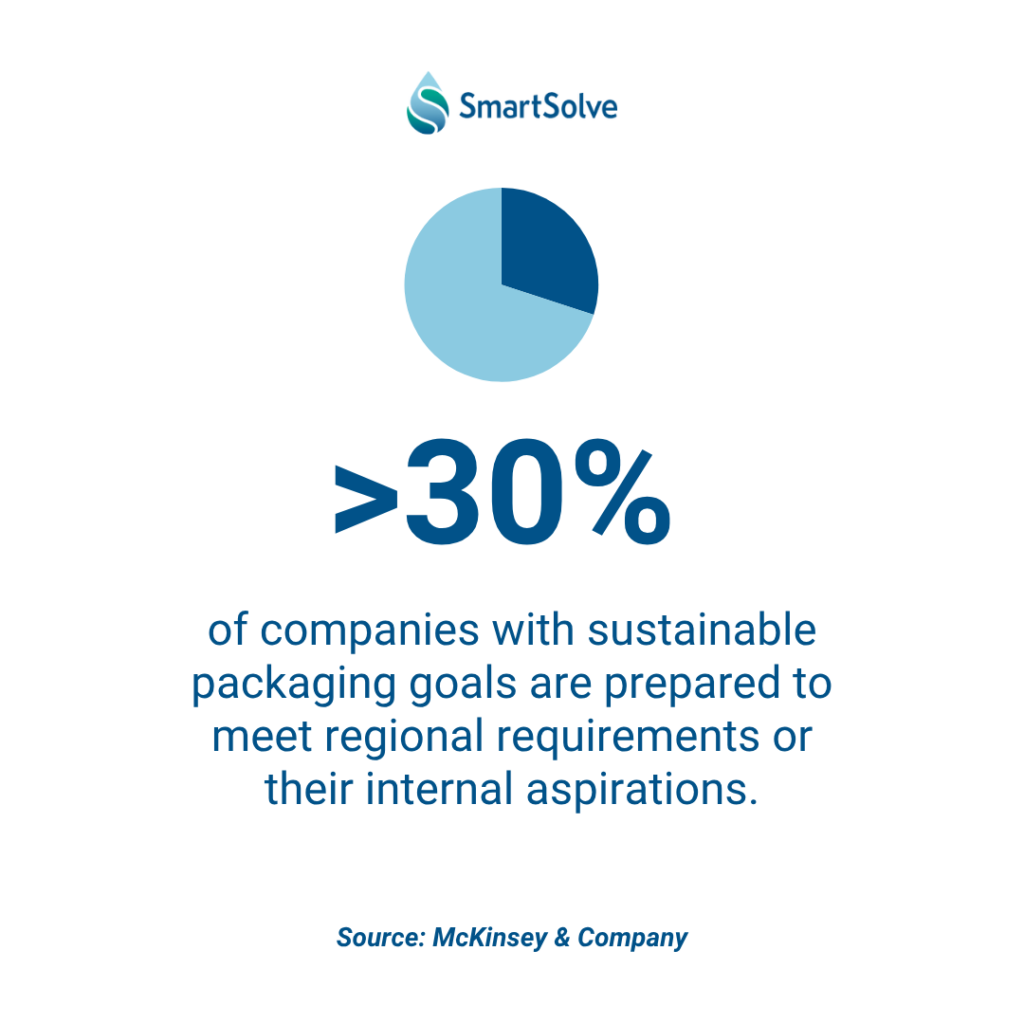
Call-out: About 75% of companies surveyed reported having clear sustainable packaging goals. Yet less than 30% of these organizations are well-prepared to meet regional requirements or their internal aspirations. (McKinsey & Company)
- Audit Your Current Packaging Portfolio
Begin by mapping every material, supplier, and end-of-life pathway. Identify where the greatest waste, cost, or compliance risk exists—for example, non-recyclable plastic films or over-engineered multi-layer bags. Auditing helps prioritize the easiest wins for improvement, like replacing single-use plastics with biodegradable or recyclable options.
- Run Pilot Programs with Sustainable Alternatives
Choose one or two product lines to test with new materials like bio-based or water-soluble films. Start with dry fertilizers or soil amendments, which are ideal for early trials. Monitor how these new packages perform in terms of sealing, product protection, and shelf life.
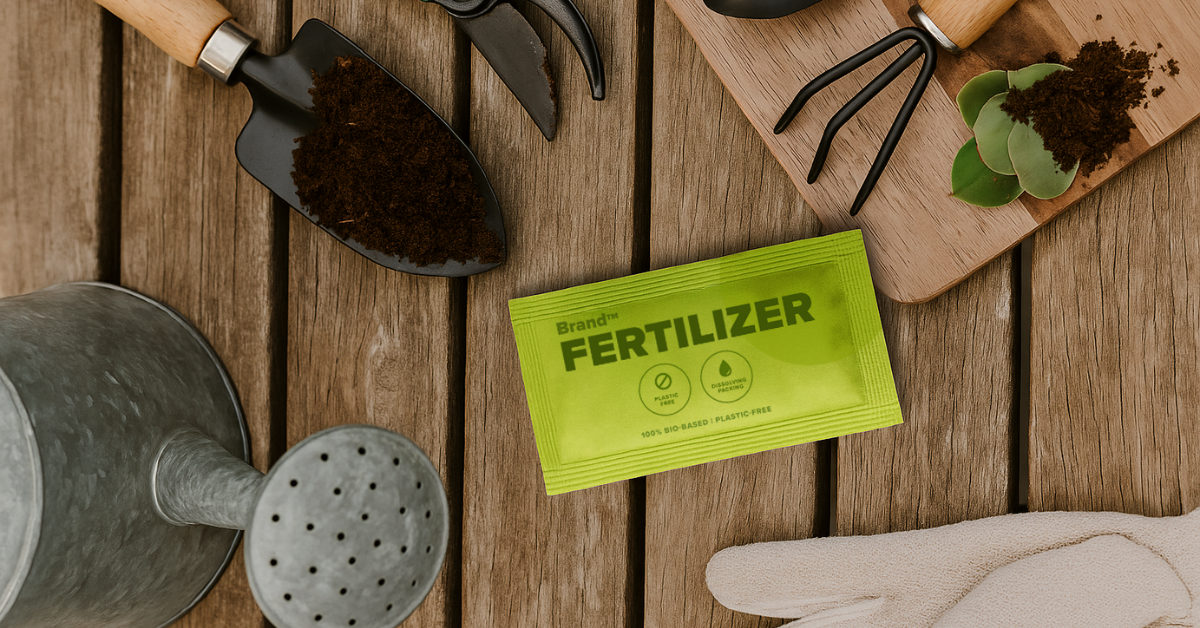
PureNil 0 from SmartSolve, for example, is a 100% bio-based and water-soluble, perfect for agricultural brands looking to prioritize product efficacy while infusing sustainability into their packaging. It’s food contact safe, so it’s ideal for dry fertilizers, nutrient mixes, and soil additives. PureNil 0 is safe for both soil and waterways since it’s non-toxic and readily biodegradable. Learn more about PureNil.
Test and Validate for Performance and Compliance
Sustainable packaging must work as well as—or better than—conventional options. Run lab and field tests for moisture resistance, shelf stability, and environmental degradation. Confirm that all materials meet USDA Organic, OMRI, and EPA standards before scaling. Partnering with suppliers who can provide documentation and technical data streamlines this process.
- Collaborate with Sustainability-Focused Suppliers
The best packaging strategies are built on partnerships. Work with suppliers who not only provide eco-friendly materials but also understand EPR compliance, traceability, and logistics. Local or U.S.-based manufacturers like SmartSolve can reduce lead times, lower carbon footprint, and offer greater supply chain reliability.
- Communicate the Change to Stakeholders and Consumers
Transparency builds trust. Once sustainable packaging is in place, communicate the “why” behind the change—not just to consumers, but also to distributors, certifying bodies, and internal teams. Highlight measurable outcomes (waste reduction, recyclability) and include clear disposal or composting instructions to ensure materials end up in the right place.
Implementing sustainable packaging is all about progress. Each material shift, process upgrade, and pilot initiative adds up to long-term impact.
Redefine Your Agriculture Packaging
The future of packaging in agriculture is clear: Sustainability, compliance, and performance can coexist. And your products and packaging will be better for it.
For packaging leaders, the next evolution is all about building resilient, eco-friendly operations that align with what customers and retailers demand.
With water-soluble, bio-based materials like PureNil™ 0, SmartSolve is helping agriculture brands transition confidently to a future where every bag, film, and pouch adds value, and eliminates waste.
Ready to see how water-soluble packaging can transform your ag products? Contact us to get a custom quote.