
The household cleaning market is in the middle of a major shift. Consumers want products that work well, cost less, and create less waste.
At the same time, brands are under pressure to rethink the materials they use; not just for formulas, but for the packaging those formulas come in.
It’s a tall order for brands. And one product line that feels this shift the most acutely is dishwasher pods.
For years, polyvinyl alcohol (PVA) film has been the go-to material for pod packaging. It dissolves in water, protects ingredients, and makes dosing simple. But with growing questions around how PVA behaves in real-world wastewater conditions, brands are now exploring options that support plastic free dishwasher pods, stronger sustainability stories, and safer product experiences.
Consumers are ready for this shift too. According to PwC’s 2024 survey, 80% of consumers say they are willing to pay more for sustainably produced or sourced goods. With the shift in consumer preferences paired with growing sustainability regulations, cleaning brands are now on the hunt for alternatives that better match this new landscape.
If your brand is evaluating new materials, this guide breaks down real, practical alternatives to PVA film, including SmartSolve’s PureNil 0 water-soluble packaging, and what they mean for the future of household cleaning.
Why Brands Are Shifting Away from Plastic Dishwasher Pod Packaging
PVA has been used for years in pod packaging because of its water solubility and convenience. But new research and growing consumer awareness have brought concerns to light.
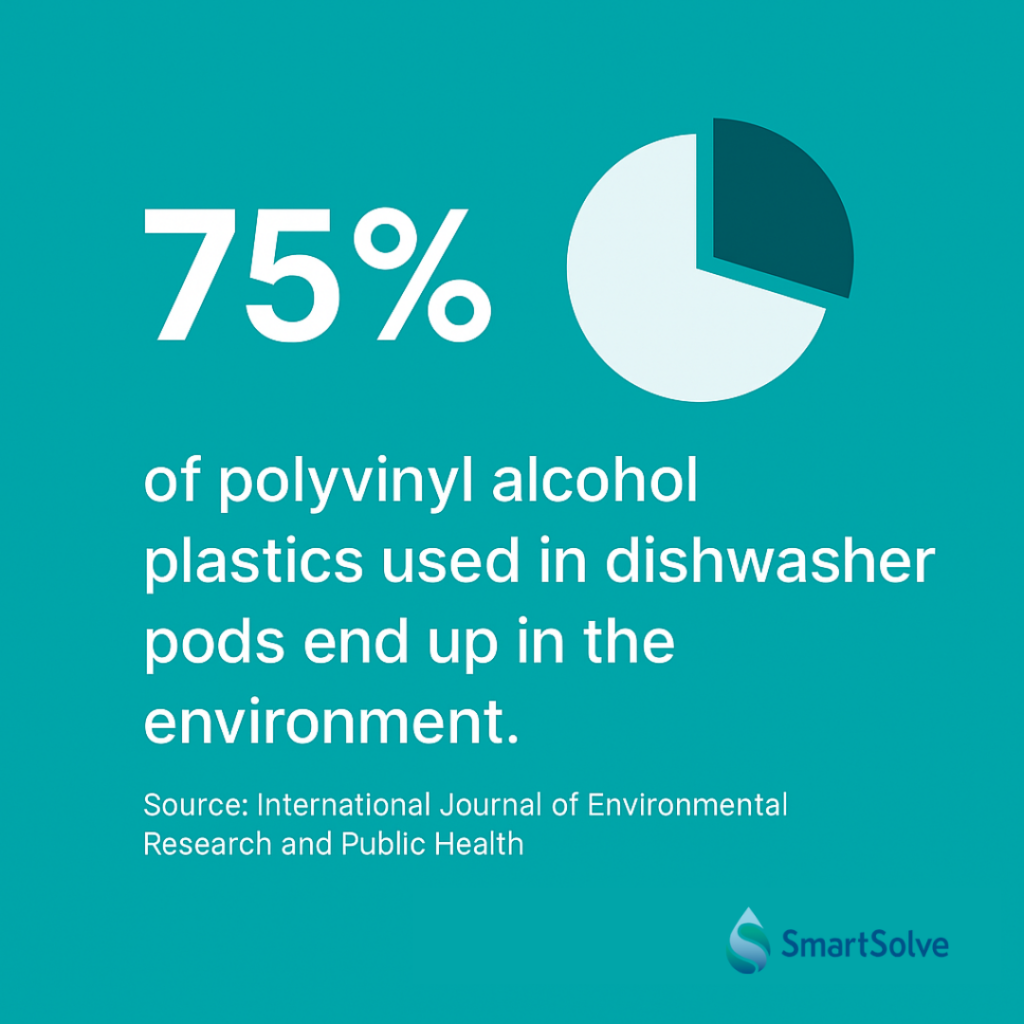
A Forbes report highlighted a study suggesting up to 75% of plastics from detergent pods may enter the environment.
The study raised important questions about wastewater conditions, microplastic residue, and whether PVA film fully breaks down outside of controlled lab settings.
This has created several challenges for cleaning brands:
1. Consumer trust and transparency
Shoppers want simple, clear answers about a product’s material and sustainability. Unclear and uncertain facts around how much plastic is making it into landfills isn’t instilling confidence in the average household cleaning consumer.
2. Rising concerns around microplastics
As more research surfaces about persistent microplastics, brands are re-evaluating any material that could contribute to them.
3. Regulatory pressure
Countries and states are tightening EPR regulations and rules around single-use plastics and environmental labeling, making forward-looking decisions more urgent.
4. Brand positioning
With demand growing for dishwasher pods without plastic, brands that proactively adopt safer and more sustainable materials can strengthen their competitive edge.
What to Look for in Plastic-Free Dishwasher Pod Alternatives
Before diving into the options, it helps to level-set on what brands actually need. The pressure to move beyond plastic has to do with everything brands care about, from safety and performance to regulatory momentum and protecting consumer trust. And with more shoppers actively seeking plastic free dishwasher pods, the materials you choose matter more than ever.
When evaluating replacements for PVA film, look for options that:
- Truly eliminate single-use plastic—reduction is more powerful than recycling alone
- Fully dissolve or compost without leaving microplastics
- Support non toxic dishwasher pods and safe consumer use
- Fit into existing packaging or manufacturing processes
- Deliver predictable dissolving performance in the dishwasher
- Avoid greenwashing risks with clear, transparent material science
Not every material checks all these boxes, which is why choosing the right one is critical for both sustainability and brand credibility.
5 Alternatives to PVA Film for Dishwasher Pod Packaging
1. PureNil™ 0 water-soluble pouch stock: Best for plastic-free, zero-waste dishwasher pods and cleaning products
PureNil 0 is a water-soluble, drain-safe material that dissolves completely, leaving behind no microplastics, no toxic residue, and no persistent polymers. It’s designed as a true PVA film alternative for brands that want simple, zero-waste material with no quality degradation or compromise.
Why it works well for dishwasher pod packaging:
- 100% water-soluble and breaks down safely after use
- No PVA or traditional plastics, making it ideal for plastic free dishwasher pods
- Zero-waste disposal – the material disappears without contributing to landfill
- Compatible with dishwashing packs, laundry pods, and surface cleaners
- Supports strong sustainability claims without technical loopholes
- Helps brands meet environmental and safety standards
- Offers a clean, transparent path toward nontoxic dishwasher pods
Because PureNil™ 0 removes plastic entirely, it’s one of the most future-forward packaging options available today – and one of the simplest to communicate transparently to consumers.
2. Compostable Plant-Based Films: Best for brands looking for a compostable solution
Plant-based films made from cellulose or other organic materials are gaining traction as an alternative to petroleum-based plastics.
Why it works well:
- Made from renewable resources
- Can compost under the right conditions
- Removes petroleum-derived plastics from the equation
Plant-based films that are compostable under the right conditions can be a powerful solution for brands looking to dip their toe into sustainable materials. However, this material usually isn’t water-soluble, making it a challenge for dishwashing use. Also, performance may vary depending on the conditions – humidity, moisture and sealing environments may impact its efficacy.
These films offer promise but aren’t always a workable solution for dishwasher pods, which require precise dissolving performance.
3. Refillable Tablet or Powder Systems: Best for brands shifting away from the pod format
Some brands are shifting away from pods entirely and exploring refillable tablets or powders that dissolve in the dishwasher. Refillable tablets or powders are a solid option that removes the need for the pod film and reduces packaging waste at the same time. The downsides to these packaging formats, though, are that tablets may be more prone to crumbling in transit. Also, due to its different format, this may require a massive shift in how products are sold and packaged.
4. Non-PVA Hard-Shell Capsule: Best for brands who prioritize protective shipping and storage
A few companies are experimenting with rigid or semi-rigid shells made from alternative polymers that dissolve under dishwasher conditions. While this packaging format is stable and protective during shipping and storage, it’s still largely in testing – biodegradation data is still being collected. Brands considering this option should take into account time and resources around consumer education and adoption.
5. Paper-Based Films: Best for eco-friendly outer packaging for dishwasher pods
Paper-based films are being researched as more sustainable outcomes for packaging. While paper is often a great alternative to plastic packaging for dry goods, the unique composition and use of dishwasher pods offer a challenge.
Paper-based films often require barrier layers which might introduce complexity around water solubility. These films are promising—and a great option for external product packaging—but not typically suited for products that must dissolve precisely inside a wash cycle.
The Next Era of Plastic-Free Dishwasher Pods
The rise of plastic-free cleaning products is only beginning.
With consumers willing to pay more for products that align with their values and with concerns growing around the environmental impact of PVA and microplastics, the time to explore alternatives is now.
While several packaging options exist, not all of them offer simplicity, transparency, or guaranteed zero-waste performance.
PureNil™ 0 stands out because it checks all the boxes: water-soluble, plastic-free, drain-safe, and easy for both brands and consumers to adopt. Ready to get started? Contact us today for a custom quote.