
In recent decades, sustainability has become a key focus in the food industry. In the 1980s, plastic exploded onto the packaging scene and became the most common material used in food packaging. In fact, nearly 40% of all plastics produced worldwide are used for food and drink packaging. These include single-use products, of which 85% ends up in landfills.
Both manufacturers and consumers alike recognize the detrimental impact of plastic on the environment. Unlike other materials, plastic does not biodegrade, so it can take up to 1,000 years to break down. This pollution impacts marine ecosystems, damages soil and can even cause serious health effects to humans.
Today’s consumers are more eco-conscious than ever, often choosing brands that align with their environmental values. As a result, adopting sustainable packaging isn’t just a trend—it’s a strategic move that can enhance brand loyalty and long-term growth. In this guide, we’ll explore what sustainable packaging is, ideas for sustainable packaging, and how to implement sustainable packaging for your food production practices.
The Case for Eco-Friendly Food Packaging: Why Switching to Sustainable Packaging Materials Is Critical to a Sustainable Future
Traditional packaging is a major contributor to environmental pollution and waste. Waste from plastic food packaging accounts for a staggering 9 million tons of plastic waste, 32% of which leaks out of collecting systems and ends up in the soil and ocean. Choosing a more sustainable alternative to this harmful packaging cycle is the key to curbing the environmental waste crisis.
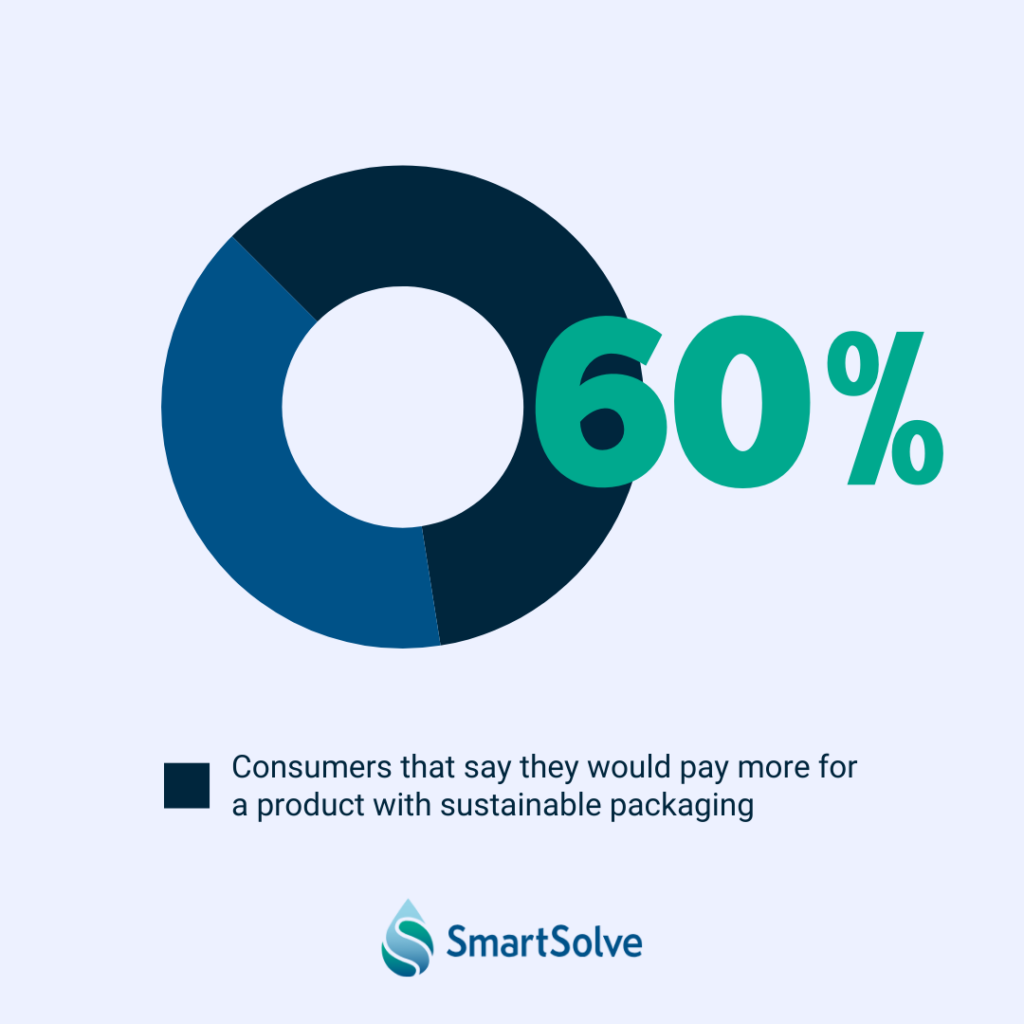
But do consumers want more sustainable packaging options? Simply put, yes. Today’s consumers are increasingly eco-conscious, seeking brands that share their values and make a genuine commitment to sustainability. In a recent study by NielsenIQ, 78% of US consumers said that a sustainable lifestyle is important to them. And more specifically, sustainable packaging is something that matters to consumers: 60% of respondents in a 2020 McKinsey survey say they would pay more for a product with sustainable packaging.
And it’s not just consumer trends driving the push for sustainable packaging. Governments and international organizations are setting regulations and initiatives to curb plastic waste and encourage more sustainable practices. Policies like the European Union’s Single-Use Plastics Directive and various plastic bans in cities and states worldwide are also impacting companies’ packaging policies and practices.
The EU policy addresses ten items that are responsible for more than 80% of marine litter in Europe, many of which are food packaging:
- Cotton bud sticks
- Cutlery, plates, straws and stirrers
- Balloons and sticks for balloons
- Food containers
- Cups for beverages
- Beverage containers (i.e. plastic bottles)
- Cigarette butts
- Plastic bags
- Packets and wrappers
- Wet wipes and sanitary items
These regulations are shaping the future of packaging by incentivizing eco-friendly options and phasing out materials that harm the environment. For companies, adopting sustainable packaging early can ensure compliance, avoid penalties, and keep them ahead of industry shifts.
What Does “Sustainable Food Packaging” Mean?
In short, sustainable food packaging is designed to reduce negative environmental impact by using recyclable materials, compostable or biodegradable materials, or materials that use less resources such as water soluble packaging. Let’s break down the key characteristics of sustainable food packaging:
Biodegradability and Compostability
Biodegradable and compostable materials are designed to break down naturally, reducing waste and preventing pollution. Biodegradable materials decompose over time through natural processes, usually aided by microorganisms, sunlight, or moisture. Compostable materials are a subset of biodegradable options. They break down even faster and transform into nutrient-rich compost when processed in a composting facility or sometimes even in home composting systems. Biodegradable and compostable options lower the demand for petroleum-based plastics, making them an environmentally friendly choice for both companies and consumers.
Renewable and Recyclable Materials
Using materials from renewable sources, such as paper, cardboard, or plant-based bioplastics, is another option to achieve sustainable packaging. Renewable resources can be replenished naturally, meaning they have a lower environmental impact over their lifecycle compared to finite resources like petroleum. Bioplastics, for example, are made from plants like corn or sugarcane, making them a more sustainable alternative to traditional plastics.
Recyclable materials also play a vital role, as they can be processed and repurposed into new products after use, preventing waste from ending up in landfills. Packaging that is easily recyclable supports circular economy practices, allowing materials to be reused multiple times. While recyclable materials are a step in the right direction when it comes to reducing pollution from food packaging, brands should consider that it’s not an infallible solution.
Reducing Packaging Waste
Reduction is reducing the amount of material used to make packaging, and has shown to reduce greenhouse gas emissions by up to 20% (versus just 2-3% for recycling). What does reduction in packaging look like? It may involve reducing the size of packaging, using dissolvable materials, eliminating unnecessary components, or opting for designs that can serve multiple purposes (such as packaging that doubles as storage).
Reduced packaging doesn’t just benefit the environment; it also helps to offset supply chain and sourcing strain, as fewer materials can go a longer way in production. This streamlined approach appeals to consumers who are increasingly wary of excessive packaging and prefer brands that make conscious efforts to reduce waste.
This is supported by the data: an interesting trend from a recent McKinsey study on whether sustainability claims made a difference with consumer spending found that products with less common claims (think water-soluble) grew 8.5% more than more common ones (“sustainable packaging,” “plant-based”).
Types of Sustainable Packaging Materials
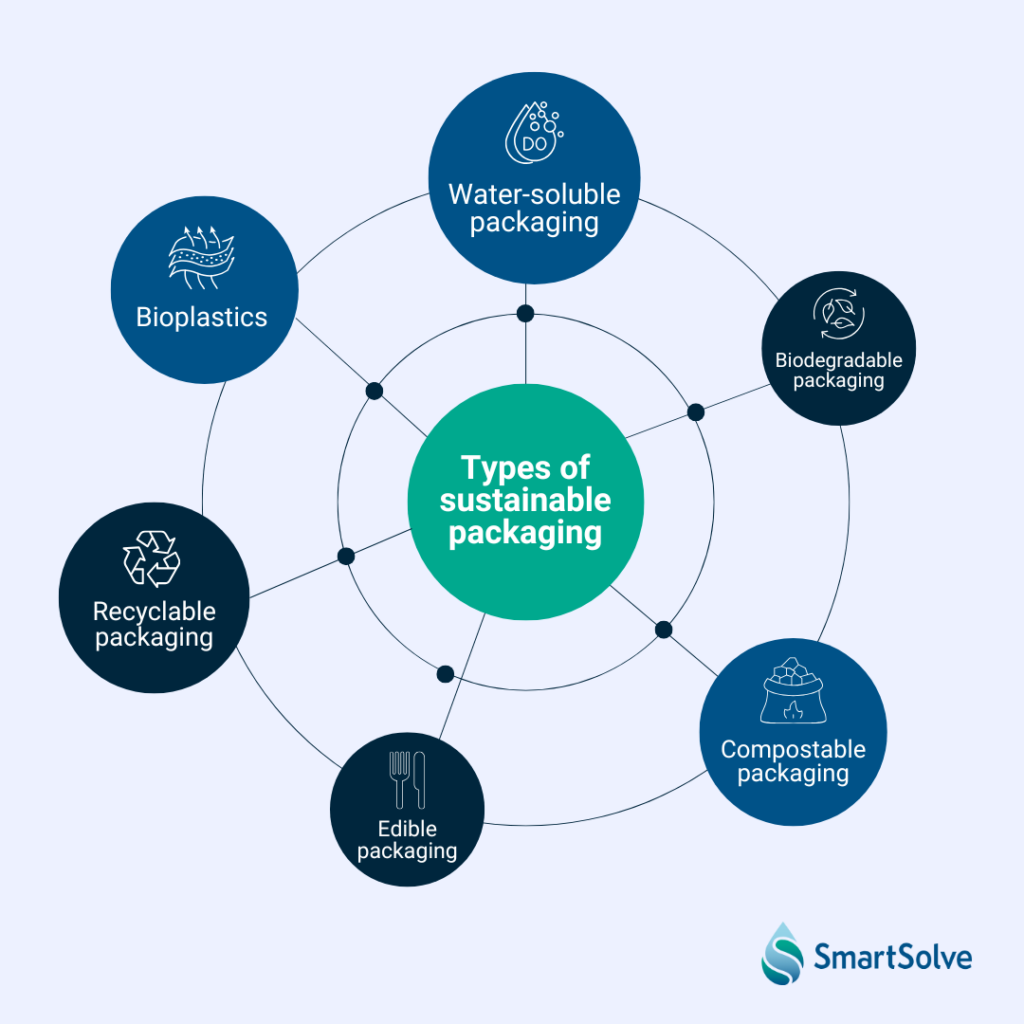
So, what are the types of sustainable packaging materials? Understanding the landscape of sustainable packaging can help you decide which is the right option depending on production needs.
Water-Soluble Packaging
Typically made from biodegradable polymers or other natural materials, water-soluble packaging materials break down and disperse into harmless components when immersed in water. Water-soluble packaging is an excellent choice for a more sustainable option as they significantly reduce plastic waste and pollution while offering the same functionality as traditional packaging.
SmartSolve’s water-soluble packaging materials are made from wood pulp fibers and cellulose. Traditional materials accumulate in landfills as waste, but water-soluble materials utilize existing infrastructure—such as drains, sewage systems, or toilets—to break down and return to nature.
Biodegradable Packaging for Food
Typically made from bioplastics, paper, or plant-based materials, biodegradable packaging can break down into natural substances (like water, carbon dioxide, and biomass) over time. The most commonly used biodegradable packaging materials are cardboard and bio-based polymers. However, biodegradable materials require specific environmental conditions to break down efficiently.
Compostable Packaging
Compostable packaging is a subset of biodegradable packaging. Like biodegradable materials, compostable options are made from materials that break down naturally into non-toxic components, like water, carbon dioxide, and organic matter. Compostable packaging is designed to disintegrate quickly in composting facilities or even in some home compost systems, leaving no harmful residues behind.
While it’s easy to conflate the two, there is an important distinction between compostable and biodegradable packaging. Compostable packaging needs a specific environment to degrade, which includes warm temperatures, nutrients, moisture and oxygen.
What’s more, the term “compostable” can be broken down further into two subsets – home compostable and industrial compostable. The difference between these two designations is in the conditions required to effectively break down the materials. Home compostable materials decompose under natural, lower-temperature conditions that can be achieved in backyard compost bins or piles. They usually break down within 6–12 months, depending on the compost setup, climate, and specific material. Industrial compostable materials, on the other hand, require more stringent conditions, requiring a commercial or industrial facility which offers specific high-heat, high-humidity, and aerated conditions that accelerate decomposition.
Bioplastics
Derived from renewable sources like corn starch, sugar cane and other plant-based materials, bioplastics can be designed to be biodegradable packaging options, reducing environmental impact compared to their fossil fuel-based alternatives. This material is often used as a sustainable packaging alternative, with nearly 50% of all bioplastics produced in the EU used for packaging production.
Edible Packaging
A newer trend in sustainable packaging is edible packaging. Made from natural, food-grade materials like seaweed, rice, or mushrooms, edible packaging provides a zero-waste alternative to traditional packaging. It’s particularly popular for single-use items like condiment packets, snack wrappers, or beverage pods.
Two Practical Tips for Transitioning Your Brand to Sustainable Food Packaging
Transitioning to more sustainable packaging doesn’t have to be a massive undertaking. It’s also well worth your while, as consumers are making their preferences for sustainable packaging clear with their wallets. As demonstrated, sustainable food packaging is as – if not more – effective than traditional packaging, and it’s on the rise around the world with consumers and producers alike.
On the other hand, keeping the status quo by continuing to leverage only fossil fuel-based packaging materials might lead to brands falling behind as the market transitions to options with a lighter environmental footprint.
To transition to more sustainable food packaging alternatives, consider taking a couple of simple steps:
1. Start small
Start with small changes, like switching one product line or part of the packaging to a sustainable option. This incremental improvement in the sustainability of your packaging goes a long way in both demonstrating commitment to customers to more eco-friendly products as well as reducing environmental footprint in a meaningful way. It also gives you market insights into consumer feedback and new processes.
2. Partner with sustainable suppliers
Partnering with suppliers who prioritize eco-friendly practices is crucial to building a truly sustainable packaging strategy. Choose suppliers that use renewable energy in production, adhere to strict environmental standards, or implement circular economy principles, like reusing materials or reducing waste in their processes. By partnering with suppliers committed to sustainability, you can also strengthen your supply chain’s resilience against future regulatory changes and shifting consumer demands for greener products.
The path to sustainable food packaging is possible – and inevitable. As consumers increasingly vote with their wallets demanding more eco-friendly options, brands can adapt their packaging strategies to meet their customers where they are while having a positive impact on the environment and adhere to sustainability standards.